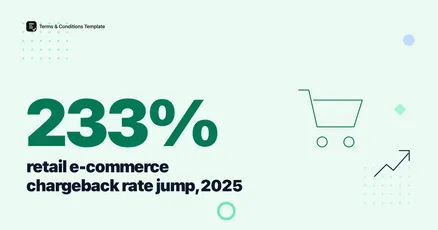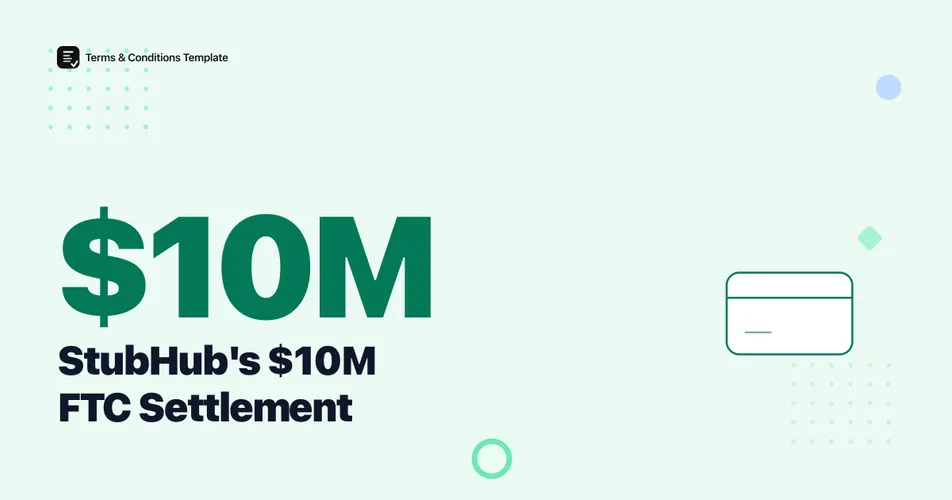
On April 9, 2026, the Federal Trade Commission announced that StubHub Holdings, Inc. will pay $10 million to settle charges that the company deceptively advertised ticket prices on its website without clearly disclosing, up front, the total amount a buyer would actually pay. The FTC’s complaint accuses StubHub of violating both the FTC Act and the Commission’s Rule on Unfair or Deceptive Fees, better known as the Junk Fees Rule, by showing a low base ticket price and only revealing mandatory service and processing fees at the final checkout step, a pattern regulators call drip pricing.
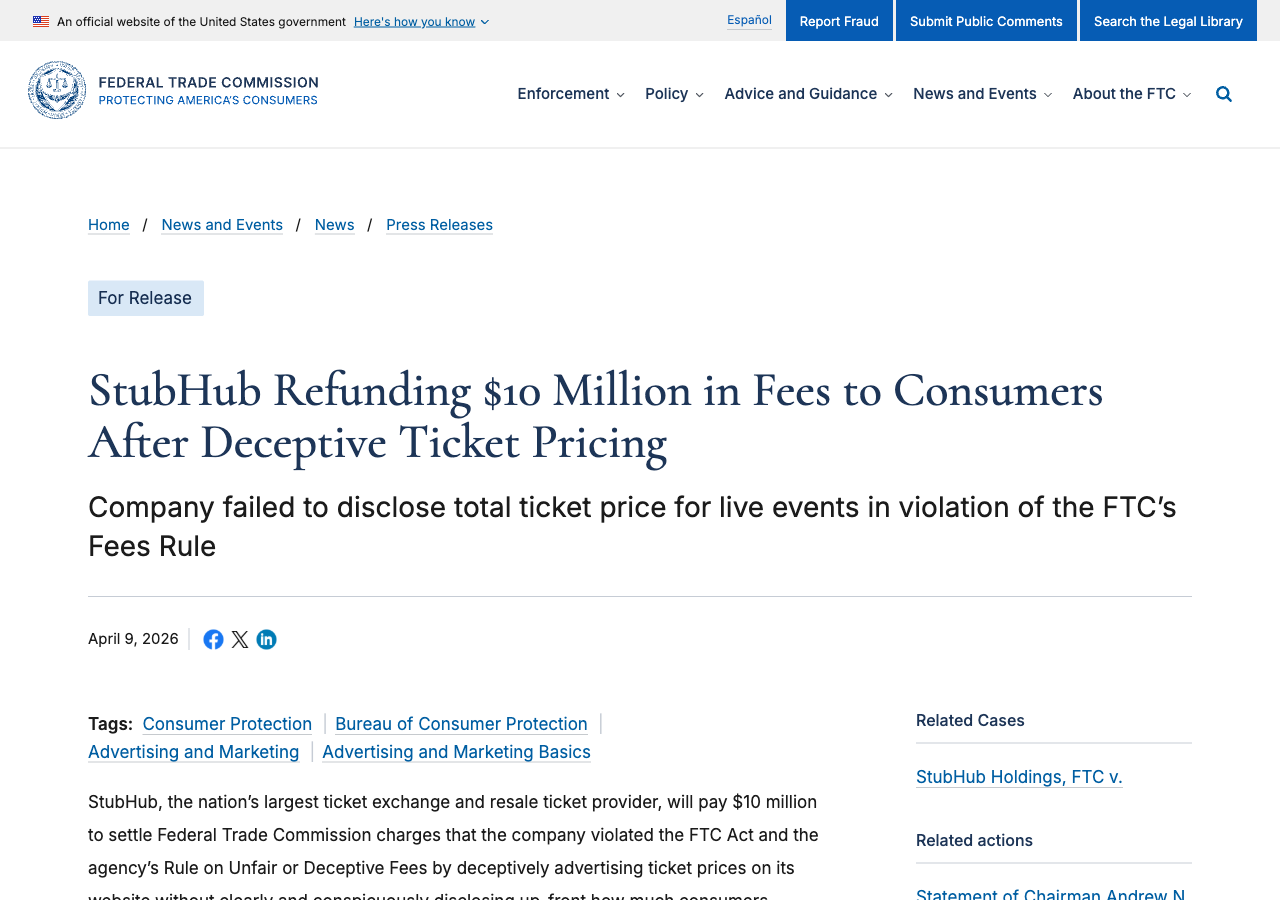
Source: Federal Trade Commission, “StubHub Refunding $10 Million in Fees to Consumers After Deceptive Ticket Pricing”, captured August 2026.
What the FTC Actually Alleged
The case traces back to a warning the FTC sent StubHub in May 2025, ahead of the NFL’s 2025 schedule announcement, telling the company that several of the prices it displayed appeared to violate the newly effective Fees Rule. The Commission’s complaint says StubHub kept advertising ticket prices without the total price for at least three days after the rule took effect on May 12, 2025, including for high-demand NFL tickets purchased in the run-up to the schedule announcement.
The complaint describes a checkout flow with three separate pricing displays, and StubHub allegedly got the disclosure wrong at every one of them. On the first two displays, the advertised price did not include mandatory fees and the total was never shown. On the third display, StubHub listed several fees and charges individually but still did not show the combined total a buyer would pay. Under the Fees Rule, that sequence is exactly what the rule was written to stop: it requires any business advertising a price for a live-event ticket to disclose the total price, defined as the maximum a consumer must pay including all mandatory fees, more prominently than any other pricing information.
Figure: The $10 million settlement funds a consumer redress program covering ticket purchases made May 12 through May 14, 2025, the window the FTC’s complaint focuses on.
What the Settlement Actually Requires
The proposed order, approved by a 2-0 Commission vote, requires StubHub to pay $10 million into a consumer redress and distribution program, and it puts a permanent set of pricing rules in place going forward.
| Requirement | What it means |
|---|---|
| Disclose the total price | Every price shown must include all mandatory fees, not just the base ticket price |
| Make the total most prominent | The total price cannot be shown smaller, later, or less visibly than any other price on the page |
| Explain excluded fees | Any fee not folded into the total must be clearly disclosed, along with what it is for, before checkout |
| Pay consumer redress | Two groups of buyers from May 12 to 14, 2025 must be refunded within 90 days of the order |
The order also bars StubHub from misrepresenting the final payment amount for any transaction, or misrepresenting any fact related to a refund or cancellation. The settlement follows an Executive Order on Ticketing that directed the FTC to prioritize price transparency across the ticket-buying process, including resale marketplaces, so this is not an isolated action against one company. The FTC has also published a consumer alert for affected buyers explaining how the redress process works.
What This Means for Your Refund and Pricing Policy
The Junk Fees Rule that StubHub violated does not only apply to ticket marketplaces. It covers any business advertising a price for a good or service and adding mandatory charges later in the purchase flow, from booking platforms to subscription services to short-term rentals. If your checkout shows one number on the product page and a higher number at the final step, the gap between those two numbers is the exact pattern the FTC built this rule to stop, and StubHub’s settlement shows the agency is enforcing it against a market leader, not just small operators.
A refund policy cannot fix a pricing display problem, but it is the page where most sites already explain what a customer pays and what happens if they cancel, which makes it the natural place to also state, plainly, that the price shown includes all mandatory fees. If your site charges a separate service fee, processing fee, or convenience fee at checkout, that fee and its purpose need to be disclosed before the customer agrees to pay, not revealed for the first time on the final screen. Our Refund Policy Generator can help you write fee and cancellation language that states this clearly, so customers see the full cost of a purchase before they commit to it rather than finding out at checkout.
Ticket sellers face a version of this problem that is specific to live events: cancellations, postponements, and no-shows each raise a different refund question, on top of the fee-disclosure question this settlement is about. Our guide on refund policy for event and ticket sales covers how to write separate language for each of those situations.
StubHub’s case is also part of a broader pattern of regulators targeting how cancellation and pricing are presented to consumers rather than what the underlying price actually is. New York City’s first municipal click-to-cancel rule and Virginia’s auto-renewal cancellation law both target the mechanism a customer has to use to get out of a purchase, the same way the Junk Fees Rule targets the mechanism a customer uses to see what they are paying. California’s AB 483 termination fee cap adds a third angle: a fee itself, not just its disclosure, can now be capped by state law. If your business charges cancellation, termination, or service fees anywhere in the purchase flow, all three of these rules are worth checking against your current terms, not just the fee-disclosure question this settlement raises. State-level rules on refund timing add a fourth layer; our guide to state cooling-off period laws covers how those interact with a standard refund policy.
Bottom Line
StubHub’s $10 million settlement did not turn on whether the company’s fees were too high. It turned on when and how clearly those fees were shown to a buyer before they paid. The FTC’s Junk Fees Rule has been in effect since May 2025, and this case is the clearest signal yet that the Commission will pursue companies that keep the old pattern of a low headline price and a higher total revealed only at checkout. If your site’s pricing or refund policy still separates the advertised price from the fees a customer actually pays, this is the moment to fix that gap before it becomes an enforcement action instead of a policy update.
The information in this article is for informational purposes only and should not be construed as legal advice on any matter, and does not create an attorney-client relationship.