On July 10, 2026, New York City Mayor Zohran Mamdani and Department of Consumer and Worker Protection (DCWP) Commissioner Samuel A.A. Levine announced that the city had finalized its “Click-to-Cancel” rule, making New York City the first municipality in the country to require businesses to let subscribers cancel as easily as they signed up. The rule takes effect October 1, 2026.
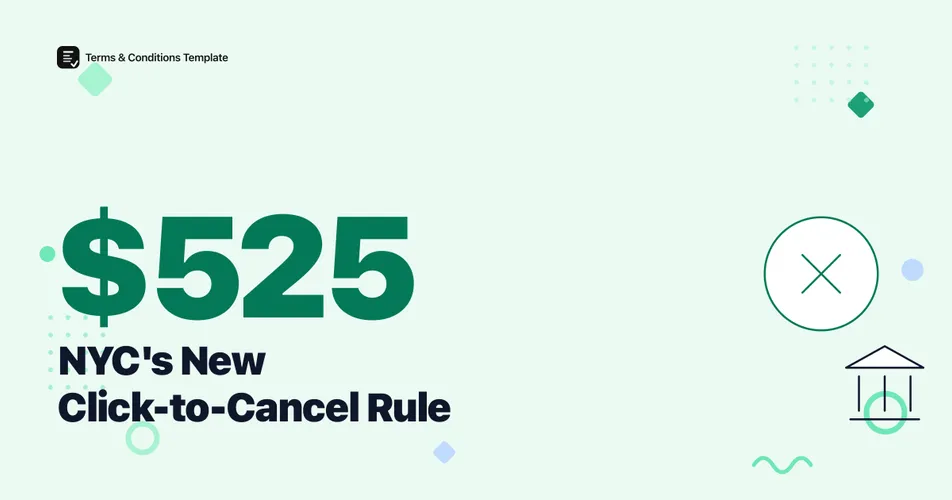
The rule implements Mayor Mamdani’s Executive Order 10 and applies to automatic renewal and continuous service subscriptions sold to New York City consumers. It requires businesses to clearly disclose subscription terms before charging a customer, and to offer a cancellation process that is at least as easy as the enrollment process, through the same channel a customer used to sign up. A business that violates the rule is liable for restitution to affected consumers plus civil penalties starting at $525 per violation. The city estimates the rule will save New Yorkers between $21.5 million and $162.5 million a year, based on analysis from the Roosevelt Institute cited in the city’s own announcement.
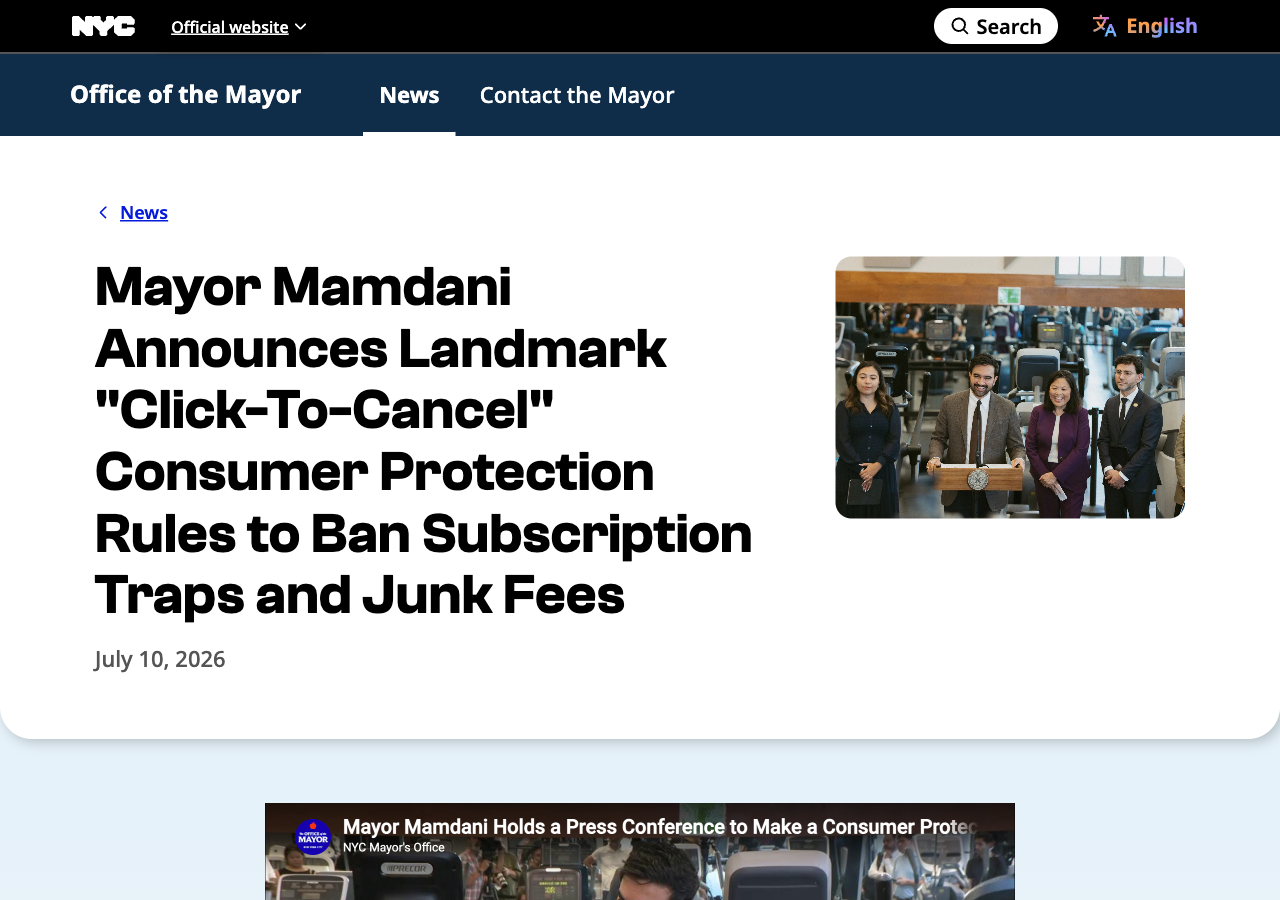
Source: NYC Office of the Mayor, captured August 4, 2026.
What the rule actually changes
New York State already has an automatic-renewal law, General Business Law Section 527-a, and on paper the city rule covers the same basic ground: disclose the terms, make cancellation available, do not trap people in a subscription they no longer want. The difference that matters for a business already complying with state law is narrower and more specific than a full rewrite of the rules.
Under the state law, a business that lets a consumer sign up online or in person can offer cancellation by phone as an acceptable alternative to an online cancellation path. According to Covington’s analysis of the new rule, the city version drops that option. A business that enrolls a New York City customer in person still has to give that customer an online (website or email) way to cancel. Phone-only cancellation, even if it satisfies state law, does not satisfy the city rule.
The city rule also carries its own, separate penalty schedule, enforced directly by DCWP rather than folded into a state action. Per the analyses from Covington and DLA Piper, penalties escalate with repeat violations and the city rule does not include the state law’s “bona fide error” defense, which lets a business avoid liability under GBL 527-a if a violation was an unintentional mistake made despite reasonable procedures to prevent it.
Figure: Civil penalties under NYC’s Click-to-Cancel rule escalate with each additional violation, per DCWP’s enforcement schedule.
How NYC compares to state law
| New York State (GBL 527-a) | New York City (Click-to-Cancel Rule) | |
|---|---|---|
| Cancellation for in-person signups | Online or phone | Online only |
| Enforcement | State Attorney General | DCWP, citywide |
| Penalty range | Up to $500 for a single violation, higher for multiple | $525 to $3,500, escalating per violation |
| Error defense | Bona fide error defense available | No error defense |
| Effective date | Already in force | October 1, 2026 |
The practical effect is that a business already compliant with New York State’s law is not automatically compliant with New York City’s law. If any part of a subscription’s enrollment happens in person, whether that is a gym membership signed at a front desk, a meal kit sold at a pop-up, or a service contract signed in an office, an online or email cancellation path is no longer optional starting October 1.
What this means if you run a subscription business
Most businesses that sell subscriptions to New York City residents are covered by this rule regardless of where the business itself is based; the rule reaches any automatic renewal or continuous service offer sold to a New York City consumer, not just businesses headquartered in the five boroughs. If your refund and cancellation policy currently describes a phone-only cancellation process for any enrollment channel, that language needs an online path added before October 1, not just a mention that phone cancellation is available.
The rule’s restitution measure is also worth reading carefully. DCWP has defined the restitution owed to a consumer as the amount charged after that consumer’s first attempt to cancel, per the coverage from Covington and DLA Piper. That means the clock on what a business owes a customer starts running from the first cancellation attempt, not from whenever the business eventually processes it. A cancellation policy that is vague about how quickly a request gets processed, or that leaves the timeline undocumented internally, creates exposure the moment a customer’s first attempt is on record somewhere, whether that is an email, a support ticket, or an account setting.
Banks, credit unions, and entities already regulated by the New York State Department of Financial Services are exempt from the city rule, so this mainly affects direct-to-consumer subscription businesses, gyms and fitness services, streaming and media subscriptions, and box or membership programs, categories DCWP has specifically flagged in its prior compliance warnings to gyms and health clubs across the city.
Bottom Line
New York City’s Click-to-Cancel rule does not reinvent cancellation law, but it closes a specific gap: phone-only cancellation for in-person signups is no longer a safe option for any business serving New York City customers once the rule takes effect on October 1, 2026. If your refund policy still describes cancellation only in general terms, or does not name the channels a customer can use, this is a reasonable trigger to update it before the deadline rather than after DCWP’s first enforcement wave. Our Refund Policy Generator builds a cancellation and refund policy that names the actual cancellation channels your business offers, so the policy matches what a customer can really do, not just what a template assumes.
The information in this article is for informational purposes only and should not be construed as legal advice on any matter, and does not create a lawyer-client relationship.