Amazon raised its Fulfillment by Amazon fees by an average of $0.08 per unit starting January 15, 2026, the company’s first FBA fee increase since freezing rates for all of 2025. Amazon describes the change as less than 0.5% of an average item’s selling price. It lands on a seller base that is growing fast: 75,000 independent sellers crossed $1 million in annual sales in 2025 alone.
FBA is the fulfillment engine behind most of what ships from Amazon’s marketplace, and its fee schedule sets the cost floor for anyone selling through it. Here is the 2026 data on what FBA sellers pay, how many there are, and how their sales are trending.
How much are Amazon’s 2026 FBA fee increases?
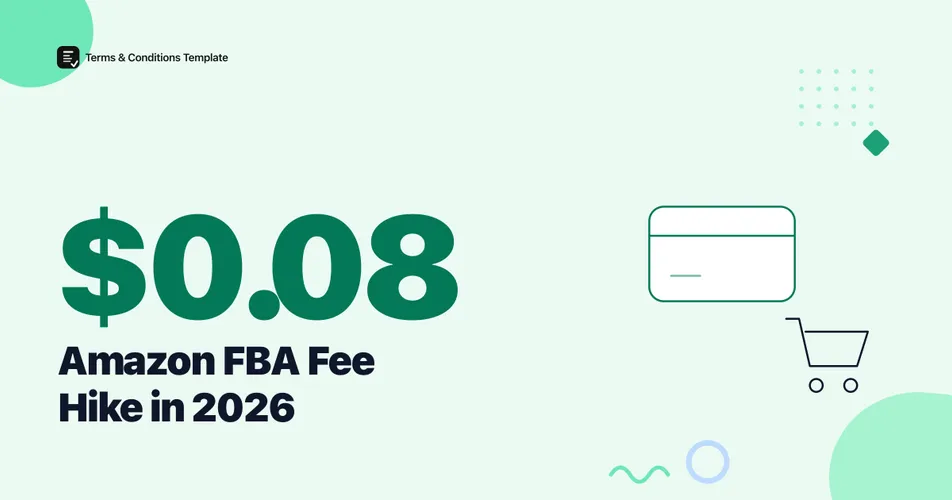
Amazon’s fulfillment fees rose by an average of $0.08 per unit on January 15, 2026, according to the company’s own seller announcement. Amazon frames the increase as modest by design: less than 0.5% of an average item’s selling price, and smaller than the 3.9% to 5.9% annual cost increases it says other major US carriers have posted. No new FBA fee categories were introduced alongside the change, and Amazon gave sellers at least 90 days’ notice before it took effect.
Figure 1: Amazon’s average FBA fulfillment fee increase, effective January 15, 2026. Source: Amazon Seller Central announcement, 2026.
Eight cents does not sound like much on a single unit, but multiplied across millions of shipments a year, it is real margin pressure for sellers already absorbing referral fees, storage costs, and advertising spend.
How has Amazon’s FBA fee schedule moved since 2023?
The 2026 increase breaks a pattern that had already paused once. Amazon raised fulfillment fees by an average of $0.22 per unit in 2023, then froze both FBA and referral fees for the entire 2025 calendar year, its first full-year freeze after several straight years of annual hikes. The $0.08 increase that took effect in January 2026 restarts the upward trend, just at a smaller step than the 2023 change.
Figure 2: Amazon FBA fee changes by year. Source: Amazon Seller Central announcements, 2023 to 2026.
| Year | FBA fee change | Notes |
|---|---|---|
| 2023 | +$0.22 per unit avg | Regular annual fulfillment fee increase |
| 2025 | $0.00 | Full-year freeze on FBA and referral fees |
| 2026 | +$0.08 per unit avg | Effective Jan 15, 2026; under 0.5% of avg item price |
Source: Amazon Seller Central announcements, 2023 to 2026.
A freeze followed by a smaller-than-usual increase reads less like a retreat and more like Amazon calibrating how much the seller base will absorb before margins push sellers toward FBM or off the platform.
What share of Amazon’s sales come from independent FBA-eligible sellers?
More than 60% of the sales in Amazon’s store came from independent sellers in 2025, up slightly from 2024, according to Amazon’s own Small Business Empowerment Report. The remaining share is Amazon’s own first-party retail business. FBA is the fulfillment method the large majority of those independent sellers rely on to reach Prime customers.
Figure 3: Share of Amazon’s total store sales by seller type, 2025. Source: Amazon Small Business Empowerment Report, 2025.
Independent sellers are not a side channel on Amazon anymore. They generate most of the store’s sales, and FBA is the infrastructure most of them use to do it: roughly 82% of Amazon sellers use FBA in some form, either exclusively or alongside self-fulfillment, according to Jungle Scout’s State of the Seller research, based on a survey of nearly 2,000 sellers fielded in late 2023 and early 2024. That figure is widely cited across seller-fulfillment research but predates the fee changes covered above, so treat it as a directional baseline rather than a 2026 measurement.
How much does Amazon charge in referral fees by category?
Referral fees, the commission Amazon takes on every sale regardless of fulfillment method, range from 8% to 45% depending on category, according to Amazon’s current published fee schedule. Most general merchandise categories sit at 15%, but a handful of categories run well above or below that baseline.
Figure 4: Amazon referral fee percentage by product category. Source: Amazon Seller Central pricing page, 2026.
Referral fees stack on top of FBA fulfillment fees, so a category’s total cost to sell depends on both numbers together, not the fulfillment fee alone.
Which fees apply to a given FBA shipment?
An FBA shipment’s total cost depends on two questions: does the item qualify for Amazon’s Low-Price FBA rates, and does it fall inside standard size and weight limits or count as oversize. Standard-size items under Amazon’s size thresholds pay the regular fulfillment fee schedule; oversize items pay a higher tier; items priced under $10 can qualify for Amazon’s reduced Low-Price FBA rate instead of the standard schedule.
Figure 5: How Amazon routes an item to its FBA fee tier. Source: Amazon FBA fee structure, 2026.
Amazon also handles returns for FBA orders under its own default return policy, which is separate from whatever refund terms a seller states in their own store policy. A seller who runs FBA alongside their own site or a hybrid FBM listing still needs a clear, published refund policy that spells out what happens outside Amazon’s own return window, since Amazon’s default rules do not automatically extend to a seller’s other sales channels.
Getting a shipment into the wrong size tier, or missing the Low-Price FBA cutoff, is one of the more common ways sellers overpay without realizing it.
How are Amazon sellers performing financially in 2026?
US-based sellers averaged more than $375,000 in annual sales in 2025, up from $290,000 in 2024, a jump of nearly 30% in one year, according to Amazon’s own reporting. That growth came alongside a sharp rise in sellers hitting major milestones: 75,000 independent sellers surpassed $1 million in annual sales in 2025, up from roughly 55,000 in 2024.
Figure 6: Average annual sales per US-based Amazon seller. Source: Amazon Small Business Empowerment Reports, 2024 and 2025.
For broader context on how many sellers are active on Amazon overall and where new-seller growth is heading, see our Amazon sellers, sales, and market share data. The seller-fee revenue that funds Amazon’s fulfillment network is also covered in detail in our Amazon third-party seller fee data, which breaks down the $172.2 billion Amazon collected from independent sellers in 2025.
Rising fees have not slowed seller growth so far. If anything, the sellers already on the platform are earning more per year than they were in 2024, even as the cost of shipping through FBA ticks up.
The Bottom Line
Amazon’s 2026 FBA fee increase is small in isolation, eight cents a unit, but it ends a freeze that sellers had come to expect after 2025. Referral fees still vary widely by category, from 8% to 45%, and stack on top of whatever fulfillment tier a given item falls into. None of that has stopped seller growth: independent sellers now generate more than 60% of Amazon’s store sales, and the number crossing $1 million in annual revenue jumped 36% in a single year. Sellers weighing FBA against self-fulfillment or a hybrid setup need to track both sides of that ledger, rising per-unit costs against a fast-growing base of sellers still finding FBA worth the fee.
Frequently Asked Questions
How much did Amazon raise FBA fees in 2026? Amazon raised Fulfillment by Amazon fees by an average of $0.08 per unit starting January 15, 2026, which it describes as less than 0.5% of an average item’s selling price. It was the first FBA fee increase since a full-year freeze in 2025.
What percentage of Amazon sellers use FBA? Roughly 82% of Amazon sellers use FBA in some form, either exclusively or alongside self-fulfillment, according to Jungle Scout’s State of the Seller research based on a survey of nearly 2,000 sellers conducted in late 2023 and early 2024.
How many independent Amazon sellers surpassed $1 million in sales in 2025? 75,000 independent sellers surpassed $1 million in annual sales in 2025, up 36% from roughly 55,000 in 2024, according to Amazon’s own Small Business Empowerment Report.
How much does Amazon say FBA saves sellers on shipping? Amazon says shipping with FBA costs 70% less per unit than comparable premium options offered by other major US carriers, based on the company’s own published comparison as of 2026.
Sources and References
- Amazon Seller Central. (2026). “2026 FBA fee changes announcement.” Average $0.08 per unit increase, effective January 15, 2026.
- Amazon. (2026). “How much does it cost to sell on Amazon: referral fee schedule.”
- Amazon. (2025). “2025 Small Business Empowerment Report.”
- Amazon. (2024). “2024 Small Business Empowerment Report.”
- Jungle Scout. (2024). “State of the Amazon Seller” survey data, cited in “How Much Do Amazon Sellers Make.” Survey of nearly 2,000 sellers, conducted December 2023 to January 2024.
- Amazon. (2026). “Fulfillment by Amazon overview.” FBA shipping cost comparison claim.
Note: All figures verified as of September 2026. Amazon typically announces FBA and referral fee changes with 90 days’ notice, so this page is refreshed at least twice a year to track new fee updates and seller-performance reports.