Amazon sellers are not imagining the squeeze. Marketplace Pulse’s 2026 Seller Index, a survey of 181 sellers representing more than $2 billion in combined annual revenue, found that 49% name marketplace fees as their single biggest threat to margin, edging out advertising spend at 46%. The fee structure behind that number has gotten more complex, not simpler, heading into 2026.
What percentage of Amazon sellers actually worry about fees?
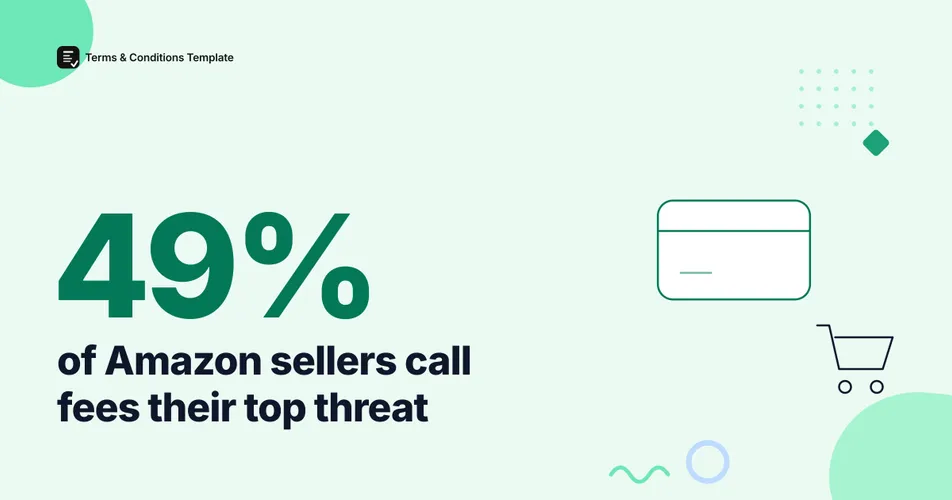
49% of sellers surveyed in Marketplace Pulse’s 2026 Seller Index picked marketplace fees as their top margin concern, just ahead of the 46% who cited advertising spend. The same survey split sellers into performance cohorts based on revenue and margin trajectory: 23% are thriving, growing revenue while improving margins, 31% are grinding, revenue up but margins flat or falling, and 38% are distressed, with margins and often revenue both moving the wrong way. Marketplace Pulse built the cohorts from financial trajectory data combined with each seller’s own strategic decisions over the survey period, rather than from a single point-in-time revenue snapshot, which is what lets the index separate a seller who is growing profitably from one who is simply growing.
Figure 1: Amazon seller performance cohorts, 2026. Source: Marketplace Pulse, 2026 Seller Index, n=181 sellers.
That distressed cohort is the group most exposed to fee increases, since a seller already losing margin ground has the least room to absorb another cost line without raising prices or cutting the product entirely. The three cohorts do not sum to 100% of Marketplace Pulse’s sample, since the index identifies a fourth, smaller residual group that does not cleanly fit the thriving, grinding, or distressed pattern.
How much does Amazon actually charge in referral fees?
Amazon’s referral fee is not one number, it is a category-by-category schedule ranging from 8% for electronics and computers up to 45% for Amazon Device Accessories, the highest rate in the catalog. Most categories, including home and kitchen, sports and outdoors, and toys, sit at the standard 15% rate, while automotive and industrial products are charged 12% and apparel over $20 runs 17% or higher. Every referral fee carries a $0.30 minimum per unit regardless of category. This is the fee line most sellers model into pricing from day one, since unlike fulfillment or storage costs it applies to every single sale on the platform, whether the seller ships the order themselves or has Amazon handle it.
Figure 2: Amazon referral fee percentage by product category. Source: Amazon Referral Fee Schedule, 2026 rates.
Referral fees were frozen at 2025 levels for 2026, so a seller who has already built these percentages into pricing does not need to re-model that line, but a seller entering a new category for the first time needs to check the specific rate rather than assume the standard 15%. The referral fee applies to the full transaction value, item price plus shipping, and is charged the same way whether the seller fulfills the order themselves or uses Amazon’s own fulfillment network.
Did Amazon actually raise fees for 2026?
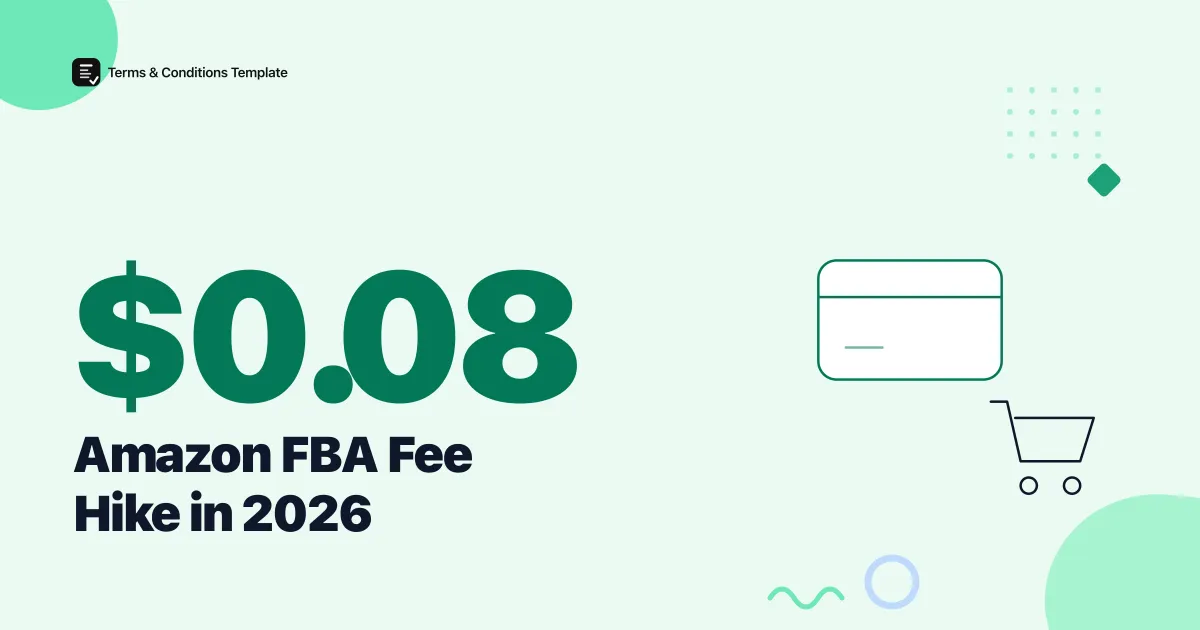
Yes, though modestly and only on the fulfillment side. Amazon confirmed FBA fulfillment fees would rise by an average of $0.08 per unit sold, under 0.5% of an average item’s selling price, effective January 15, 2026. That follows a year with no referral or FBA fee increases at all in 2025. Amazon’s own announcement framed the increase as smaller than the 3.9% to 5.9% annual cost increases major US carriers have applied over the same two years, positioning the change as restrained relative to the broader logistics market rather than as a standalone cost hike.
Figure 3: Amazon’s 2026 average FBA fee increase against recent major carrier rate increases. Source: Amazon 2026 fee announcement; carrier comparison as stated by Amazon.
A sub-0.5% average increase sounds small in isolation, but it lands on top of referral fees, storage fees, and advertising costs that were already consuming a large share of revenue for most sellers, which is likely why the increase drew more seller frustration than its headline size would suggest. Amazon calculates the increase per unit rather than as a flat percentage, so the real impact varies by product size and weight tier rather than landing evenly across every seller’s catalog. A seller with a catalog concentrated in larger or heavier items typically absorbs more of the increase in dollar terms than one selling small, light products, even when both see the same sub-0.5% headline figure quoted back to them.
How do all these fees stack up on a single sale?
A single Amazon sale runs through several fee lines before a seller sees the payout, and a returned unit adds one more. Refund policies that account for Amazon’s own return-processing charges, not just the customer-facing return window, help sellers avoid pricing a return as if it only costs them the product itself.
Figure 4: The order Amazon deducts fees from a sale, including the return-specific charge. Source: Amazon fee schedule and Returns Processing Fee rate card, 2026.
Amazon overhauled its FBA Returns Processing Fee in June 2024 and moved it onto its own size-tier and shipping-weight rate card as of January 15, 2026, charging sellers $1.50 to $5.00 per returned unit depending on size, with a standard mid-size item costing $1.84 per return. Apparel and footwear get the harshest treatment: those categories have no return-rate threshold, so every single return is charged at the full rate-card price regardless of how low a seller’s return rate runs. Sellers shipping fewer than 25 units a month are exempt. Most other categories still carry a return-rate threshold, meaning the fee only applies once a seller’s returns exceed a category-specific benchmark, which rewards sellers whose listings and sizing information keep returns genuinely low. This is a meaningful shift for the categories that already ran high return rates before the rule change, since accurate sizing charts and product photos now translate directly into a lower fee bill rather than just a lower return-shipping cost. Sellers who track their own return-rate percentage against the published threshold for their category, rather than discovering it after a fee statement lands, keep more control over this specific cost line than any other fee Amazon charges.
What is Amazon’s total take on a typical sale?
Figure 5: Share of Amazon sellers who call marketplace fees their top margin threat. Source: Marketplace Pulse, 2026 Seller Index.
Third-party seller fees and advertising together now generate roughly a third of Amazon’s total company revenue, according to Marketplace Pulse’s April 2026 analysis of the marketplace’s financials. Published estimates of Amazon’s effective take rate, referral fees, fulfillment, storage, the fuel surcharge, and advertising combined, range from 37% to 51% of seller revenue depending on product category and fulfillment method, though the higher end of that range includes advertising spend that is technically optional rather than a mandatory platform fee. Our Amazon statistics roundup has the full picture of seller counts, sales volume, and market share behind these fee figures, and our Amazon returns data covers the customer-facing side of the same returns that now carry a seller-side processing fee.
Amazon fee categories compared
| Fee type | Typical rate | Notes |
|---|---|---|
| Referral fee, most categories | 15% | $0.30 minimum per unit |
| Referral fee, electronics | 8% | Lowest standard category rate |
| Referral fee, Device Accessories | 45% | Highest rate in the catalog |
| Returns Processing Fee, standard mid-size | $1.84 per return | Apparel/footwear charged on every return |
Source: Amazon Referral Fee Schedule and Returns Processing Fee rate card, 2026.
The Bottom Line
Amazon’s 2026 fee changes are individually small, an average $0.08-per-unit FBA increase and frozen referral rates, but they land on a seller base where 49% already call fees their top margin threat and 38% are classified as distressed rather than growing. The bigger structural number is the estimated 37% to 51% total take rate once referral, fulfillment, storage, returns processing, and advertising are all counted together. Sellers who price a return at only the product’s cost, without the size-tier Returns Processing Fee layered in, are underpricing their real margin exposure every time a customer sends an item back.
Frequently Asked Questions
What percentage of Amazon sellers say fees are their biggest problem? 49% of Amazon sellers named marketplace fees as their primary margin concern, according to Marketplace Pulse’s 2026 Seller Index, a survey of 181 sellers representing over $2 billion in combined annual revenue.
How much is Amazon’s referral fee? Amazon’s referral fee ranges from 8% for electronics and computers to 45% for Amazon Device Accessories, with most categories charged 15% and a $0.30 minimum fee per unit, per Amazon’s published fee schedule.
Did Amazon raise FBA fees in 2026? Yes. Amazon raised fulfillment fees by an average of $0.08 per unit, under 0.5% of an average item’s selling price, effective January 15, 2026, after not raising referral or FBA fees at all in 2025.
Does Amazon charge sellers for customer returns? Yes. Amazon’s FBA Returns Processing Fee, overhauled in June 2024 and running on its own rate card since January 15, 2026, charges sellers per returned unit based on size tier, with apparel and footwear charged on every return regardless of return rate.
Sources and References
- Marketplace Pulse. (2026). “The Paradoxical Dependence of Amazon & Its Sellers.” 2026 Seller Index, n=181 sellers, $2B+ combined revenue.
- Amazon. (2026). “Update to U.S. Referral and Fulfillment by Amazon Fees for 2026.” Official fee change announcement, effective January 15, 2026.
- Feedvisor. (2026). “Amazon Referral Fees by Category, 2026 Rates & Guide.” Compiled from Amazon’s published referral fee schedule.
- Feedvisor. (2026). “Amazon Returns Processing Fees: 2026 Rate Card.” Compiled from Amazon’s Returns Processing Fee schedule, effective January 15, 2026.
Note: All figures verified as of August 2026. Amazon’s fee schedule changes at least annually, so headline figures are refreshed at least twice a year.