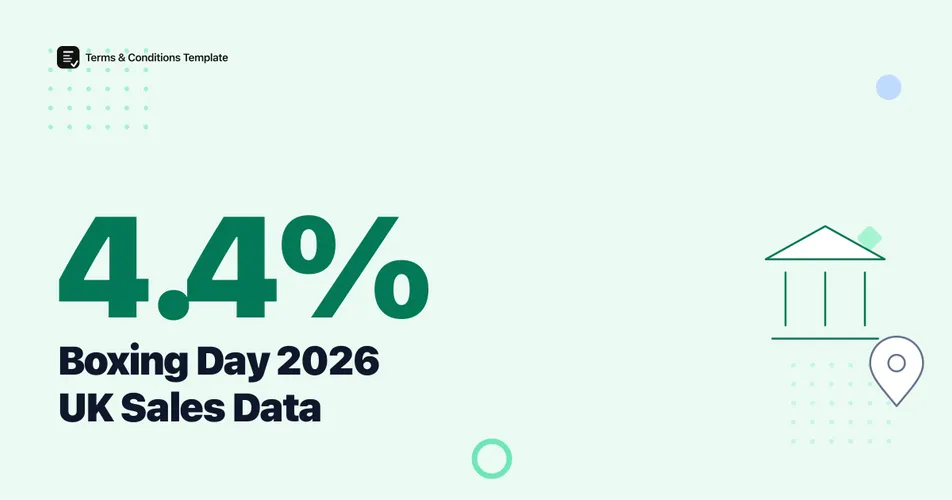
UK Boxing Day footfall climbed 4.4% year-over-year in 2025, the strongest increase in more than a decade, according to retail analytics firm MRI Software’s tracking of more than 660 UK stores and retail parks. Shoppers came back to the high street in force, but the spending numbers tell a more cautious story: Barclays recorded planned Boxing Day spend falling to £3.6 billion, even as a separate VoucherCodes forecast put the figure higher, at £3.81 billion.
The gap between how many people showed up and how much they spent is the real story of Boxing Day 2025, and it sets up a January sales period that, per the latest BRC-KPMG data, ended up outgrowing December itself.
How much did UK Boxing Day footfall rise in 2025?
UK Boxing Day footfall rose 4.4% year over year in 2025, the strongest increase MRI Software has recorded in over a decade of tracking. The gains were not evenly spread: coastal towns led at a 10% jump, retail parks rose 6.9%, and outer London grew around 4%. Central London was the exception, with footfall falling 7.7% year over year as shopping patterns continued shifting away from the capital’s core.
Figure 1: UK Boxing Day 2025 footfall change by destination type, year over year. Source: MRI Software, 660+ UK retail locations tracked.
Evening trading did particularly well: MRI Software recorded 9.6% growth between 5pm and 11pm on Boxing Day, well ahead of the 3.1% growth logged during the 6am to 5pm window. A rise in footfall does not automatically mean a rise in revenue, and that distinction matters for the spend numbers below.
How much did UK shoppers spend on Boxing Day in 2025?
Two named forecasters disagree on the actual figure. Barclays’ Consumer Spend report, based on a survey of 2,000 UK shoppers, put total Boxing Day 2025 spending at £3.6 billion, down from £4.6 billion in 2024 and £4.7 billion in 2023. VoucherCodes’ Shopping for Christmas Report, a separate retail-spend model, forecast £3.81 billion, a 2.2% rise on 2024’s £3.73 billion and the highest Boxing Day total since 2021.
Figure 2: Barclays’ Boxing Day spend forecast, UK, 2023 to 2025. Source: Barclays Consumer Spend report.
Warning
Barclays and VoucherCodes measure Boxing Day spend differently: Barclays surveys shopper intentions ahead of the day, while VoucherCodes builds a retail-spend model from broader economic and sales data. The two do not agree on direction, Barclays shows a decline and VoucherCodes shows growth, so treat either single figure as one forecaster’s estimate rather than a settled total.
What both forecasters agree on is participation: only 26% of UK consumers told Barclays they planned to shop the Boxing Day sales in 2025, down from 28% in 2024, even though the average shopper who did take part planned to spend £253, up £17 from 2024. Seven in ten shoppers, 69%, said cost pressures would affect their spending, up sharply from 47% a year earlier.
That pattern lines up with what we found researching UK Christmas shopping habits for 2026: shoppers spent cautiously in the run-up to the holiday and then concentrated their spending into the sales window instead.
Do UK shoppers spend more in-store or online on Boxing Day?
In-store spending still leads by a wide margin. VoucherCodes forecast £2.61 billion spent in physical stores on Boxing Day 2025, more than double the £1.20 billion forecast for online. Across the full post-Christmas sales period, December 25 to 31, the same report put total spending at £14.15 billion, split £8.54 billion in-store and £5.61 billion online.
Figure 3: Post-Christmas sales period spend split, December 25 to 31, 2025. Source: VoucherCodes Shopping for Christmas Report.
Barclays’ shopper survey backs up the in-store lean from the demand side too: 49% of shoppers said they preferred to shop in physical stores over the Boxing Day period, against 40% who preferred online, and 23% said they would rather stay home with family than shop at all (categories overlap, since shoppers could pick more than one preference). Fashion topped shopping lists at 37%, ahead of food and drink at 27%.
If you run an online or in-store store that publishes a return window, keep that window visible at the point of sale. Shoppers weighing an in-store versus online purchase over Boxing Day frequently check return terms before deciding where to buy, and a clear refund policy removes that hesitation regardless of which channel they choose.
Is Boxing Day spending shifting into the January sales?
Yes, and the BRC-KPMG Retail Sales Monitor shows exactly how much. UK retail sales grew just 1.2% year over year in December 2025, down from 3.2% growth in December 2024, as non-food sales fell 0.3%. BRC chief executive Helen Dickinson pointed to shoppers deliberately holding off before Christmas to wait for Boxing Day and January discounts instead.
Figure 4: BRC-KPMG UK retail sales growth, December 2025 versus January 2026, year over year. Source: BRC-KPMG Retail Sales Monitor.
That wait paid off in the data: January 2026 retail sales accelerated to 2.7% year-over-year growth, more than double December’s rate, with food sales up 3.8% and non-food up 1.7%. KPMG’s Linda Ellett credited the rebound specifically to January sales enticing shoppers back, with electronics, furniture, and children’s apparel among the strongest categories.
How has Boxing Day trading changed since the pandemic?
Boxing Day trading has not fully recovered to its pre-pandemic shape. The Centre for Retail Research recorded a 36.6% drop in bricks-and-mortar Boxing Day revenue in 2020 versus 2019, when store closures forced much of that year’s sales online, and 2021 sales were still running around 18% below 2019 levels. The 4.4% footfall jump in 2025 is the strongest single-year recovery signal since, though it has come alongside falling spend forecasts rather than rising ones.
Figure 5: Key UK Boxing Day and post-Christmas trading milestones. Sources: Centre for Retail Research, MRI Software, BRC-KPMG Retail Sales Monitor.
Do Boxing Day sales drive a wave of returns?
Not immediately. Returns platform Loop processed 3,100 UK returns on Boxing Day 2024 across 88 merchants, worth roughly $367,260 in returned merchandise value at an average of $118.63 per return. That is a modest total next to the day’s overall retail activity, because most post-Christmas returns land later: January 2 is the actual UK peak return day, and Loop’s wider merchant panel saw return volume rise 15.2% year over year in 2024 versus 2023.
Figure 6: A typical Boxing Day return eligibility path. Illustrative flow based on common refund policy terms, not a single named source.
This pattern matches the wider picture we found researching post-Christmas returns data for 2026: the return wave builds through the first two weeks of January rather than peaking on Boxing Day itself, which gives retailers a short window to make sure their return terms are easy to find before the volume arrives.
Boxing Day spend forecasts, 2023 to 2025
| Source | 2023 | 2024 | 2025 |
|---|---|---|---|
| Barclays Boxing Day spend forecast | £4.7bn | £4.6bn | £3.6bn |
| VoucherCodes Boxing Day spend forecast | Not published | £3.73bn | £3.81bn |
| UK Boxing Day footfall change (YoY) | Not published | Not published | +4.4% |
Source: Barclays Consumer Spend report; VoucherCodes Shopping for Christmas Report; MRI Software.
In-store versus online spend, December 2025
| Period | In-store | Online | Total |
|---|---|---|---|
| Boxing Day (26 Dec) | £2.61bn | £1.20bn | £3.81bn |
| Full sales week (25-31 Dec) | £8.54bn | £5.61bn | £14.15bn |
Source: VoucherCodes Shopping for Christmas Report, 2025.
The Bottom Line
The headline number for 2026 planning is not a spend total, it is the 4.4% footfall increase, the strongest Boxing Day recovery signal in over a decade. Spend forecasts disagree on direction, but both named forecasters agree that fewer, more selective shoppers are driving the numbers, and that a growing share of the season’s spending is landing in January instead of on Boxing Day itself. Retailers who keep their return terms clear at checkout, in-store and online alike, are best placed to hold onto that footfall once the January sales pull spending forward again.
Frequently Asked Questions
How much did UK shoppers spend on Boxing Day in 2025? Barclays forecast 3.6 billion pounds in Boxing Day spending for 2025, down from 4.6 billion in 2024, while VoucherCodes’ Shopping for Christmas Report separately forecast 3.81 billion pounds, a 2.2% rise on 2024. The two figures differ because they come from different survey and forecasting methodologies.
Did more people go shopping on Boxing Day in 2025? Yes. UK Boxing Day footfall rose 4.4% year over year in 2025, the strongest increase in over a decade, according to MRI Software’s tracking of more than 660 UK retail locations. Retail parks led the gains at 6.9%, while central London footfall fell 7.7%.
Do UK shoppers spend more in-store or online on Boxing Day? In-store spending leads by a wide margin. VoucherCodes forecast 2.61 billion pounds in-store against 1.2 billion pounds online for Boxing Day 2025, and 8.54 billion pounds in-store against 5.61 billion pounds online across the full December 25 to 31 sales period.
Do Boxing Day purchases get returned more than other purchases? Returns cluster in the days after Boxing Day rather than on the day itself. Returns platform Loop processed 3,100 UK returns on Boxing Day 2024 across 88 merchants, but January 2 was the actual peak return day for UK retailers, and Loop’s merchant panel saw UK-adjacent return volume rise 15.2% year over year.
Sources and References
- Barclays. (2025). “UK Shoppers Set to Spend £3.6 Billion in the Boxing Day Sales.” Consumer Spend survey of 2,000 UK shoppers, published December 26, 2025.
- VoucherCodes.co.uk. (2025). “Shoppers Forecast to Spend £3.81bn on Boxing Day.” Shopping for Christmas Report, published December 24, 2025.
- Sporting Goods Intelligence Europe, citing MRI Software. (2025). “UK Boxing Day 2025: Footfall Surges 4.4% in Strongest Increase in Over a Decade.” Footfall tracking across 660+ UK retail locations, published December 29, 2025.
- British Retail Consortium. (2026). “Drab Christmas as Consumers Wait for Sales.” BRC-KPMG Retail Sales Monitor, December 2025 data, published January 13, 2026.
- Business Matters, citing BRC-KPMG. (2026). “Retail Spending Rebounds in January After Weak Christmas.” BRC-KPMG Retail Sales Monitor, January 2026 data, published February 11, 2026.
- Centre for Retail Research. “Shopping for Christmas.” Historical Boxing Day trading data, 2020 to 2021, page updated February 2022.
- Loop Returns. (2025). “Boxing Day Ecommerce Merchant Returns by the Numbers.” Data from 4,000+ Loop merchants across the US, UK, and AU/NZ, published January 23, 2025.
Note: All figures verified as of October 2026. Boxing Day spend and footfall figures are refreshed at least twice a year as Barclays, VoucherCodes, and BRC-KPMG publish updated reports.