On October 28, 2026, the Federal Trade Commission issued Section 6(b) study orders to nine companies, asking whether and how they use personal data to set prices for consumers and, for ride-hailing and delivery firms, how they set worker pay. This is a study. It is not a rule, it is not an enforcement action, and it has no effective date for anyone to comply with. The FTC has not accused any of the nine companies of breaking the law.
Still, the orders land on top of a second, separate federal development that matters more to a small business: a proposed policy statement on personalized pricing that the FTC put out for public comment on August 19, 2026. As of this writing we have not seen a final version of the statement. Keeping those two things apart is the most useful thing to do with this news, so this post does that first and then covers what your terms and pricing pages should say if you adjust prices by loyalty tier, location, or customer behavior.
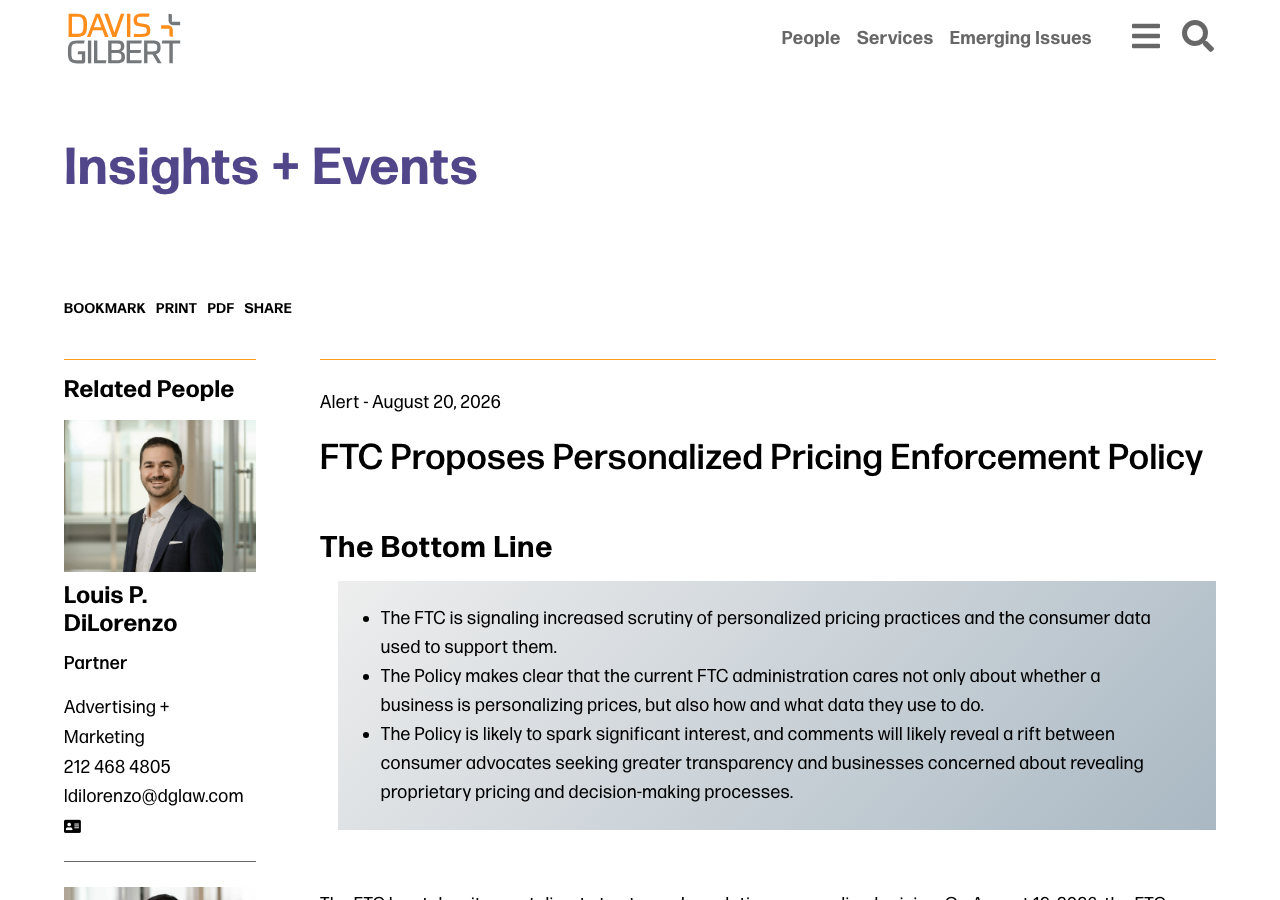
Source: Davis+Gilbert, captured October 31, 2026.
Two different things, one headline
The study orders are in effect now. According to MarketScale, FTC orders nine companies to say whether personal data shapes their prices and pay, the Commission voted 2-0 to issue them, recipients have 45 days from receipt to respond, and the FTC can seek to compel compliance in federal court if a company does not. The recipients are Delta, United, JetBlue, Lyft, Uber, DoorDash, Instacart, Target, and Walmart. Per IAPP, FTC expands personalized pricing scrutiny, Chairman Andrew N. Ferguson said: “Consumers deserve to know whether companies use their web surfing habits or other personal data to estimate the highest price they can charge each consumer.”
The proposed policy statement is a different instrument and is not final. As described by Davis+Gilbert, FTC Proposes Personalized Pricing Enforcement Policy, if it were finalized in its current form, businesses that collect or use customer data would have to clearly and conspicuously disclose when and how they use that data to generate personalized prices. Nothing in it binds anyone today.
| Study orders (in effect) | Proposed policy statement (not final) | |
|---|---|---|
| Date | October 28, 2026 | August 19, 2026 |
| Status | Issued and in effect | Proposed, not final |
| Who it applies to | Nine named companies | Businesses that collect or use customer data for pricing, if adopted |
| What it asks | How prices and worker pay are set, and whether personal data is involved | Disclosure that a price is personalized, the basis, and the data types used |
| Binding | Recipients must respond within 45 days | No, and not yet final |
Figure: The nine companies that received FTC 6(b) orders, grouped by sector as described in the coverage of the announcement. Delivery covers DoorDash and Instacart.
What the orders actually ask
According to MarketScale’s reading of the release, the FTC wants to know whether the price of a ticket, a ride, a delivery, or another product varies from person to person, and if so what inputs, tools, and procedures produce that price. Loyalty program participation and analysis of personal data such as browsing habits are named as the kinds of factors in question. For ride-hailing and delivery companies, the orders also ask whether driver compensation is adjusted using information such as phone usage or a driver’s history of accepting past offers.
The same coverage notes that in a July 2024 concurring statement, Ferguson described personalized pricing as an ordinary, long-standing practice in categories like insurance and credit, and said the open question was whether it had spread to goods consumers would not expect to be priced that way. That framing is a good guide to tone. A study asks questions; it does not assume the answers.
What the proposed statement would expect
Davis+Gilbert reports that the proposal would not ban personalized pricing. Instead it treats a failure to tell consumers that a price is personalized as a possible material omission under Section 5 of the FTC Act, since consumers generally expect to pay the same price as other buyers. Circumstances it lists as calling for disclosure include prices adjusted by geographic location, by access to alternatives, or by personal circumstances that may affect a consumer’s need or willingness to pay.
The same summary says the proposal would call for three things: that a price is personalized, the basis of the personalization, and the types of data used. It also gives examples. Calling a price “specially selected” would not be enough, while explaining that a price reflects an estimated willingness to pay drawn from a consumer’s prior purchases through the same login account would be, if accurate and complete. The firm also notes that New York already requires a notice near any personalized price reading “THIS PRICE WAS SET BY AN ALGORITHM USING YOUR PERSONAL DATA.” Whether you sell in New York or not, that gives a sense of how plain these disclosures are expected to be.
What to check in your own terms
Most small businesses do not run individualized pricing engines, and a standard loyalty discount is a different thing from an algorithm estimating how much a given shopper will tolerate. Start by sorting your own practices honestly. A member price that every member gets, a published student rate, or a regional price list that anyone in that region sees are common and easy to describe. Pricing that changes for a specific person because of what you know about them is the category the FTC’s language points at.
If you do vary prices by loyalty tier, location, or behavior, your terms and pricing pages are the natural place to say so in plain words. A short pricing section can state which factors can change what a customer pays (for example, membership level, delivery address, or purchase history), that these adjustments are applied by rule rather than negotiated one by one, and where a customer can read more about the data involved, usually your privacy policy. The aim is to match the proposal’s three questions: is the price personalized, on what basis, and using what kind of data.
Two details tend to get missed. First, the disclosure should sit where the price is shown, not only in a long terms page, because the proposal’s standard is “clearly and conspicuously.” Second, your terms and your actual practice have to agree. If the terms say prices are the same for everyone while a discount engine quietly varies them, the terms themselves become the problem. The same logic runs through fee disclosure, which we covered in our post on the StubHub drip pricing settlement, and through price changes on recurring plans, covered in subscription price rises in 2026.
If you pay gig workers or drivers, the study’s labor questions are a reminder that compensation methods deserve the same plain description in contractor agreements. Nothing requires that today, but it is cheap to write down how pay is set.
Bottom Line
The October 28 orders are a study of nine companies with no stated outcome, and the August 19 policy statement is a proposal that could change or never be finalized. Neither one requires you to change your terms this week. They do point in one consistent direction: if a price depends on who the customer is, say so, say why, and say what data is involved. A clear pricing clause in your Terms and Conditions Generator output, matched to what your checkout really does, is a low-cost way to be ready whichever way the FTC goes.
Sources
MarketScale, FTC orders nine companies to say whether personal data shapes their prices and pay. IAPP, FTC expands personalized pricing scrutiny as states, Congress, regulators turn up pressure. Davis+Gilbert, FTC Proposes Personalized Pricing Enforcement Policy.
The information in this article is for informational purposes only and should not be construed as legal advice on any matter, and does not create a lawyer-client relationship.