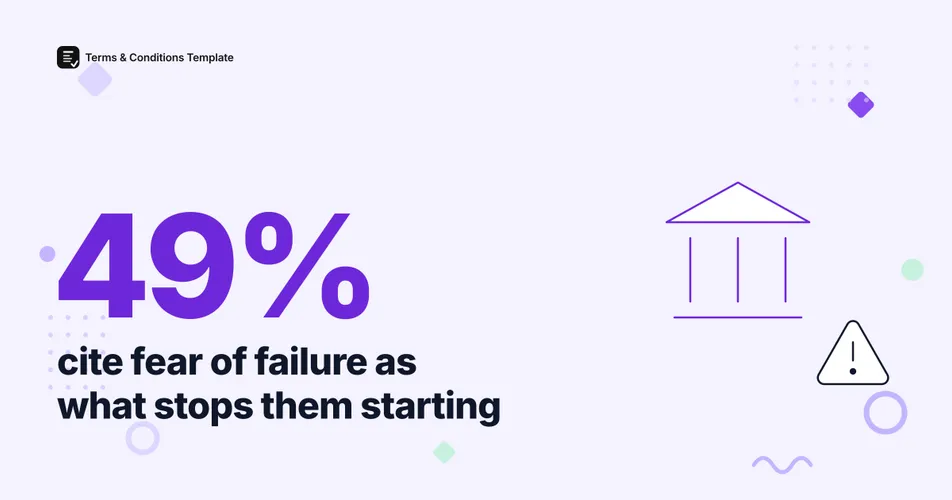
Starting a business has never been more common, and fear of failing at it has never been more widely reported at the same time. According to the Global Entrepreneurship Monitor’s 2024/2025 Global Report, based on more than 150,000 adults surveyed across 50 economies, 49% of people who say they see a good business opportunity also say fear of failure is what stops them from acting on it, up from 44% in 2019.
That is the tension running through this year’s global entrepreneurship data: record numbers of people starting businesses, and a record share of people talking themselves out of it before they start.
How many people are actually afraid to start a business?
Nearly half of adults who spot a real opportunity do not act on it, and fear of failure is the specific reason they cite. GEM’s global survey found this figure rose from 44% in 2019 to 49% in 2024, and the pattern is not limited to a handful of countries. The number of economies where at least two in five opportunity-seers cite fear of failure climbed from 34 of 50 (68%) in 2019 to 43 of 51 (84%) in 2024.
Figure 1: Share of adults who see a good business opportunity but say fear of failure stops them from starting one. Source: GEM 2024/2025 Global Report, “Entrepreneurship Reality Check.”
The direction matters more than any single year’s number. This is a widening gap, not a one-off dip, and it is showing up across a growing share of the economies GEM tracks, not just a few outliers. GEM’s researchers frame this as a structural signal rather than a mood swing: opportunity recognition is not the bottleneck for most would-be founders, confidence in their own ability to survive a failed attempt is. That framing matters for anyone building policy or support programs aimed at founders, since fixing access to funding alone would not close a gap rooted in confidence.
Which countries actually have the most entrepreneurs?
Entrepreneurial activity is far from evenly spread. Ecuador posted the highest Total Entrepreneurial Activity, the share of adults actively starting or running a business under 42 months old, at 32.7% in GEM’s 2023 data, with Chile close behind at just over 30%. The United States, despite its 2024 figure being a record for the country, sat at 19%, roughly two thirds higher than the average across the 32 high-income economies in GEM’s dataset but still well under half of Ecuador’s rate.
Figure 2: Total Entrepreneurial Activity by country. Source: GEM 2023 and 2024/2025 national reports.
Latin American economies, Ecuador, Chile, Colombia, Panama, and Guatemala among them, consistently post some of the highest entrepreneurial activity rates GEM measures, well above high-income economies like the United States and Canada. High activity does not automatically mean high survival, which is exactly why this data needs to be read alongside the fear-of-failure figures above rather than in isolation. Necessity-driven entrepreneurship, starting a business because no comparable employment exists, explains part of the gap: it runs higher in many of these same economies, while the United States skews more heavily toward opportunity-driven starts.
Is the US actually starting more businesses?
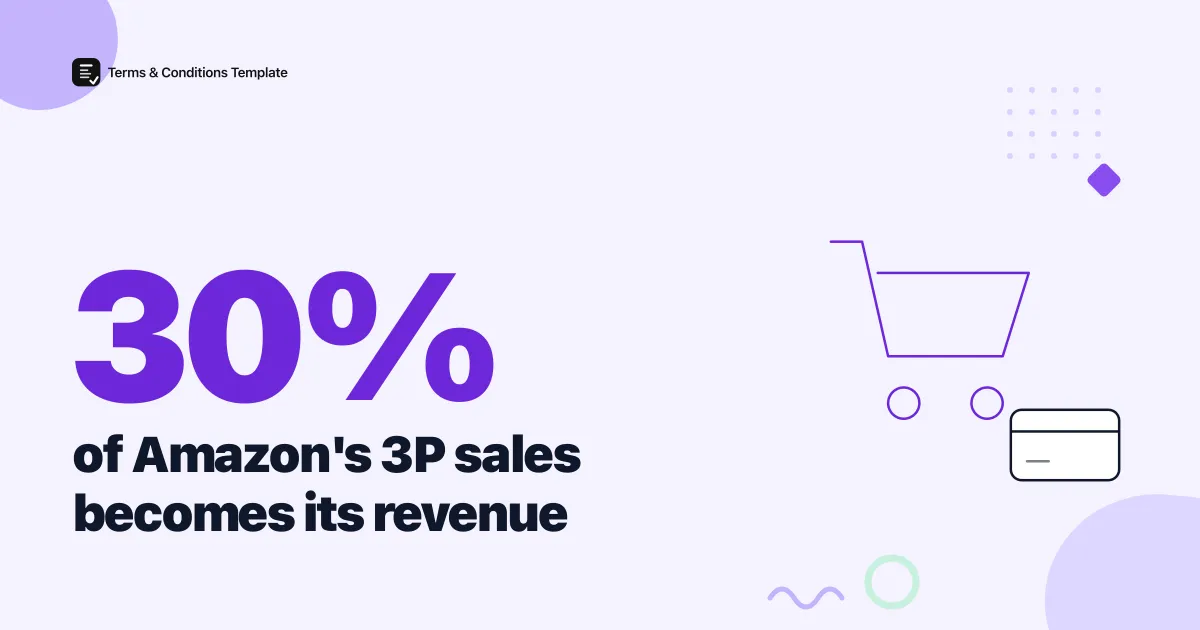
Yes, by a wide margin. The US Census Bureau recorded 5,671,836 total business applications in 2025, a new all-time high that beat the previous record set in 2023. Of those, 1,708,842, about 30.1%, were classified as high-propensity applications, meaning they showed concrete signs of becoming a real, payroll-generating business rather than a paperwork filing that goes nowhere. The Census Bureau’s model, built with the Federal Reserve Board and the Federal Reserve Bank of Atlanta, flags a filing as high-propensity when it shows planned wages, a corporate structure, or registration in an industry with a track record of turning into an operating business.
Figure 3: Share of 2025 US business applications classified as high-propensity. Source: US Census Bureau, Business Formation Statistics.
A high-propensity filing is the moment a founder’s plan starts turning into an operating business: a name, a structure, and usually a website. That is also the point where basic legal documents, terms and conditions among them, stop being optional. Our small business website data shows how quickly that step follows business formation for most new founders, and our small business ecommerce figures show how many of those new sites are set up to sell something rather than just inform.
What does the path from application to a compliant business look like?
Filing a business application is the start of a short, fairly predictable sequence for most new founders, not the finish line. The businesses in the high-propensity share above are the ones most likely to move through every step below within their first year. Where founders typically fall short is not the entity formation step, which most states process quickly and mechanically, but the legal-terms step that has no filing deadline and no regulator chasing it, so it is the one most easily deferred indefinitely. That deferral is the single most avoidable gap in the sequence below.
Figure 4: The typical path from a business application to a legally defined website, and where most new founders skip a step. Source: synthesized from US Census Bureau Business Formation Statistics above.
Founders who generate a terms and conditions agreement as soon as the site goes live close that gap before a single customer signs up, rather than retrofitting it after a dispute forces the question. That gap compounds fast: our count of active small businesses in the US shows a market of tens of millions of existing operators, meaning a new founder’s site is competing for trust against businesses that have already had years to put a proper terms and conditions page in place.
The cost of skipping this step is not hypothetical. A site with no stated terms has no defined limitation of liability, no stated dispute process, and no clear ownership language for user-submitted content, three gaps that only become visible the first time something goes wrong with a customer or user. Publishing the document before launch, rather than after an incident, is the difference between a five-minute task and a legal scramble, and it is the single cheapest step in the entire path from application to operating business.
What is holding entrepreneurs back globally?
Figure 5: Share of opportunity-seeing adults deterred from starting a business by fear of failure, 2024. Source: GEM 2024/2025 Global Report.
Fear of failure is only part of the picture. GEM’s 2025/2026 Global Report, drawing on more than 160,000 individuals across 53 economies representing 43% of the world’s population and 57% of global GDP, found that in 36 of those 53 economies, access to entrepreneurial finance is rated insufficient, and entrepreneurship education in schools is the lowest-rated framework condition in 33 of them. Only 4 economies, India, Lithuania, Saudi Arabia, and the UAE, met or exceeded sufficiency across all 13 conditions GEM tracks. The United Arab Emirates ranked first on GEM’s National Entrepreneurship Context Index for the fifth consecutive year.
Entrepreneurial activity by country compared
| Economy | Total Entrepreneurial Activity | Year | Notable finding |
|---|---|---|---|
| Ecuador | 32.7% | 2023 | Highest recorded among GEM economies |
| Chile | ~30% | 2023 | Third-highest globally |
| United States | 19% | 2024 | Historic high for the US; nearly two-thirds above the high-income economy average |
| High-income economy average | Lower than US | 2024 | US TEA runs well above this benchmark, per GEM’s own comparison |
Source: GEM 2023 national reports; GEM 2024/2025 USA National Report.
The Bottom Line
Global entrepreneurship data for 2026 tells two true stories at once. Founders in the United States are filing business applications at a record pace, 5,671,836 in 2025 alone, and US entrepreneurial activity hit a historic 19% in 2024. At the same time, 49% of adults worldwide who spot a real opportunity say fear of failure stops them from acting on it, a figure that has climbed steadily since 2019. The founders who do act are moving fast from application to entity to live website, and the ones who skip publishing terms and conditions at that stage are operating with no defined baseline for how they handle their own users, right at the moment they are most exposed to a dispute.
Frequently Asked Questions
What percentage of people are afraid to start a business? 49% of adults who see a good business opportunity say fear of failure stops them from starting, up from 44% in 2019, according to the Global Entrepreneurship Monitor’s 2024/2025 Global Report, based on over 150,000 surveyed adults across 50 economies.
Which country has the highest rate of entrepreneurial activity? Ecuador recorded the highest Total Entrepreneurial Activity rate among GEM-tracked economies at 32.7% in 2023, followed by Chile at just over 30%, both far above the United States at 19%.
What is the US rate of entrepreneurial activity? US Total Entrepreneurial Activity reached 19% in 2024, the highest level recorded in GEM’s history for the country, according to the GEM 2024/2025 USA National Report.
How many new business applications were filed in the US in 2025? The US Census Bureau recorded 5,671,836 business applications in 2025, a new all-time high, of which 1,708,842, about 30.1%, were classified as high-propensity applications likely to become payroll-generating businesses.
Sources and References
- Global Entrepreneurship Monitor. (2025). “GEM 2024/2025 Global Report: Entrepreneurship Reality Check.” Adult Population Survey of 150,000+ individuals across 50 economies.
- Global Entrepreneurship Monitor. (2026). “GEM 2025/2026 Global Report: From Uncertainty to Opportunity.” 53 participating economies, 160,000+ individuals surveyed.
- Global Entrepreneurship Monitor. (2025). “GEM 2024/2025 USA National Report.” US Total Entrepreneurial Activity at 19%, a historic high.
- US Census Bureau. (2025). “Business Formation Statistics Monthly Data Release.” 5,671,836 total applications; 1,708,842 high-propensity applications for 2025.
Note: All figures verified as of August 2026. Entrepreneurship rates and business formation data are refreshed at least twice a year as new GEM and Census Bureau releases become available.