More than half of Gen Z shoppers, 51%, now practice what the retail industry calls bracketing: ordering multiple sizes or colors of the same item online with a plan to keep one and return the rest, according to NRF and Happy Returns’ 2024 Consumer Returns in the Retail Industry report, based on a survey of 2,007 US consumers. The habit shows up across generations and countries, and it is expensive enough that a growing share of retailers now charge for it directly. This piece breaks down who brackets the most, what it costs retailers and the apparel industry, and how return policy is shifting in response going into 2026.
How many shoppers admit to bracketing their online orders?
Figure 1: The headline bracketing rate among US Gen Z shoppers. Source: NRF and Happy Returns, 2024 Consumer Returns in the Retail Industry report, n=2,007.
NRF and Happy Returns asked 2,007 US consumers who had returned at least one online purchase in the past year about their shopping habits, and found bracketing has “seen growth among younger consumers, with 51% of Gen Z consumers indicating they engage in this practice.” The same report found 93% of the 249 retail professionals surveyed alongside consumers called retail fraud and other exploitive return behavior a significant issue for their business, a category bracketing sits inside without being identical to.
The habit is not new, and it is not limited to Gen Z. Narvar’s fifth annual “State of Returns: Finding What Fits” report found 58% of 1,040 recent US returners reported bracketing back in 2021, before the term had entered mainstream retail vocabulary. What has changed since then is that retailers now name the behavior explicitly in their own surveys and price it into policy.
Bracketing sits at the intersection of a real sizing problem and a low-cost workaround. Free, easy returns removed the risk of guessing wrong, so a share of shoppers stopped guessing at all.
Who brackets the most, by generation and country?
The rate varies by who is asked and how the question is framed, but every recent measurement puts bracketing at roughly half of shoppers or higher in the group studied. UK shoppers report the highest rate in the data available: 62% of 1,002 UK shoppers surveyed by fulfillment provider Fulfilmentcrowd in January 2025 admitted to bracketing fashion purchases specifically, split almost evenly by gender at 62.7% of women and 62.1% of men.
Figure 2: Bracketing rates are highest where fashion sizing uncertainty is highest. Sources: Fulfilmentcrowd (2025), Narvar (2021), NRF and Happy Returns (2024), Appriss Retail and Deloitte (2024).
Fulfilmentcrowd’s survey put a number on the gap between what UK shoppers buy and what they keep: the average UK online shopper orders about 22 fashion items a year and returns roughly 6 of them, a return rate the firm puts at 30%, with “poor fit” cited as the leading reason. No comparably sized bracketing-specific survey exists yet for most other major markets, so cross-country comparisons beyond the US and UK should be treated as an open question rather than a settled ranking.
The generational pattern inside the US is consistent with the international one: younger shoppers who grew up with free returns as a default are more comfortable treating a cart as a fitting room.
What does bracketing cost retailers and the apparel industry?
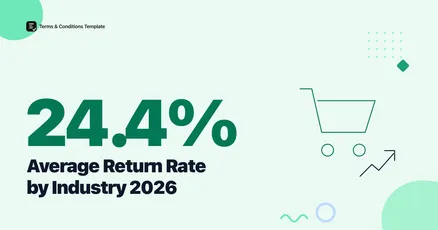
Apparel absorbs most of the cost. Coresight Research’s “The True Cost of Apparel Returns” study measured a 24.4% online return rate for US apparel and footwear in the twelve months to March 2023, against an estimated $155.8 billion online apparel and footwear market, which the firm translated into roughly $38 billion in returned merchandise and about $25 billion in processing costs for that single year.
Figure 3: Returned apparel as a share of the full US online apparel and footwear market. Source: Coresight Research, “The True Cost of Apparel Returns,” 2023.
Bracketing is not the only driver of that 24.4% rate, but sizing-related returns are consistently cited as the largest single cause in apparel, which is exactly the category bracketing concentrates in. For the all-category picture this apparel figure sits inside, see our ecommerce return rate benchmarks for 2026, and for the apparel breakdown specifically, see our clothing return rate statistics.
Holiday season concentrates the cost further. Returns platform Loop Returns tracked 4.87 million items submitted for return across more than 3,800 merchants between November 1 and December 31, 2024, worth $723.3 million in total, of which merchants retained $184.6 million after processing and restocking. Categories with less bracketing behavior look very different: beauty and personal care return at an estimated 4% to 12%, the lowest of any major category, largely because opened cosmetics cannot be resold, which removes most of the incentive to bracket in the first place. See our beauty return rate data for 2026 for that comparison in full.
How are retailers fighting back against bracketing?
Retailers are converging on two responses: charging for it, and reducing the sizing uncertainty that causes it. NRF’s 2025 survey of 358 retail professionals found 72% of retailers now charge for at least one type of return, up from 66% the year before, even as 82% of the 2,006 consumers surveyed in the same report still call free returns a major purchase consideration. Publishing exactly which return types carry a fee, and which do not, in a clear refund policy is what lets a retailer charge for bracketing-driven returns without surprising a first-time customer who made a single honest mistake.
Figure 4: How a bracketed return typically resolves once a retailer has a stated fee policy. Source: synthesized from NRF’s 2025 retailer survey findings above.
The second response tackles the cause rather than the symptom. True Fit’s case study with outdoor gear retailer Moosejaw, published April 2026, found nearly 15% of Moosejaw’s returned online orders were attributable to size bracketing before the retailer added AI-driven size guidance at checkout. Over the following year, bracketing-driven returns fell 24%, and the share of shoppers exhibiting bracketing behavior at all dropped 34%. That is one retailer’s vendor-reported outcome rather than an independently audited industry benchmark, but it is a rare before-and-after data point in a space that mostly reports prevalence, not intervention results.
How does bracketing prevalence compare at a glance?
| Group | Bracketing rate or metric | Source |
|---|---|---|
| UK shoppers, fashion purchases | 62% | Fulfilmentcrowd, 2025 |
| US shoppers, 2021 baseline | 58% | Narvar, 2021 |
| US Gen Z shoppers | 51% | NRF and Happy Returns, 2024 |
| Retail executives calling it a significant problem | 47% | Appriss Retail and Deloitte, 2024 |
Figure 5: How bracketing measurement and retailer response have moved together since 2021. Sources: Narvar (2021), NRF and Happy Returns (2024, 2025), Fulfilmentcrowd (2025), True Fit (2026).
The four-way comparison above uses different survey populations and question wording, so treat it as a directional picture of “roughly half or more of shoppers in the group studied,” not a single precise national rate.
The Bottom Line
Bracketing is not a fringe habit. It is now the default sizing strategy for a majority of Gen Z shoppers in the US and a majority of shoppers overall in the UK, and it sits behind a meaningful share of the $849.9 billion in US retail returns projected for 2025. Retailers cannot eliminate the behavior without reintroducing the friction that free returns were built to remove, so the practical response has split two ways: charge transparently for the returns bracketing causes, and reduce the sizing uncertainty that makes bracketing rational in the first place. Both responses depend on a return policy that states its terms clearly before checkout, not after a customer has already ordered three sizes.
Frequently Asked Questions
What percentage of Gen Z shoppers practice bracketing? 51% of Gen Z shoppers admit to bracketing, ordering multiple sizes or colors of an item online with a plan to keep one and return the rest, according to NRF and Happy Returns’ 2024 Consumer Returns in the Retail Industry report, based on a survey of 2,007 US consumers.
Is bracketing the same thing as return fraud? No. NRF and Happy Returns separately measured fraud at 9% of all 2025 returns, a distinct category covering things like empty boxes and counterfeit swaps. Bracketing is a legitimate, if costly, buy-to-try habit; 47% of retail executives still call it a significant problem, per Appriss Retail and Deloitte’s 2024 Consumer Returns in the Retail Industry survey of 150 executives.
How are retailers responding to bracketing? 72% of retailers now charge for at least one type of return, up from 66% the year before, according to NRF’s 2025 survey. Some are also investing in AI size-guidance tools; True Fit’s case study with outdoor retailer Moosejaw found a 24% reduction in bracketing-driven returns within a year.
Does bracketing happen more in the US or elsewhere? The UK rate runs higher in the data available: 62% of UK shoppers admit to bracketing fashion purchases, versus 51% of US Gen Z shoppers, according to Fulfilmentcrowd’s January 2025 survey of 1,002 UK shoppers and NRF’s 2024 report.
Sources and References
- NRF and Happy Returns. (2024). “2024 Consumer Returns in the Retail Industry.” Survey of 2,007 US consumers and 249 retail ecommerce and finance professionals, published December 5, 2024.
- NRF and Happy Returns. (2025). “2025 Retail Returns Landscape.” Survey of 2,006 US consumers and 358 retail professionals, published October 15, 2025.
- Fulfilmentcrowd. (2025). UK online fashion returns and bracketing survey, n=1,002 UK shoppers, published January 27, 2025.
- Digital Commerce 360. (2025). Coverage of Appriss Retail and Deloitte’s “2024 Consumer Returns in the Retail Industry” survey of 150 retail executives (47% bracketing figure), and Loop Returns’ 2024 holiday returns tracking data across 3,800+ merchants.
- Coresight Research. (2023). “The True Cost of Apparel Returns: Alarming Return Rates Require Loss Minimization Solutions.”
- True Fit. (2026). Moosejaw case study on size bracketing and AI size guidance, published April 21, 2026.
- Narvar. (2021). “The State of Returns: Finding What Fits,” 5th annual report, n=1,040 US adults who had returned an online purchase in the prior six months.
Note: All figures verified as of August 2026. Bracketing prevalence is measured by different surveys with different populations and question wording, and retailer return-fee policy continues to shift quickly, so headline figures here are refreshed at least twice a year.