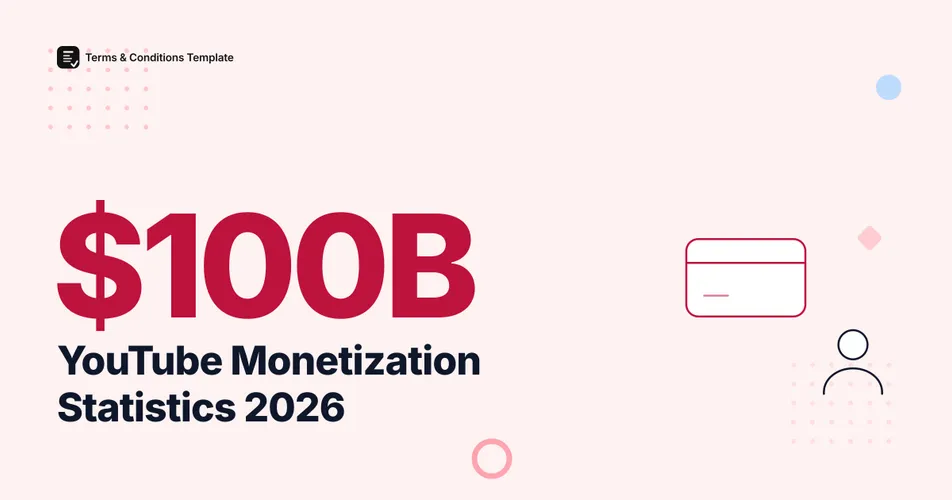
Creator payouts on YouTube have crossed a new threshold. YouTube announced at its September 2025 Made on YouTube event that it has paid more than $100 billion to creators, artists, and media companies since 2021, up from the $70 billion figure the company had cited just a year earlier. Total ad revenue hit $36.1 billion in 2024 alone, up 15% year over year. Monetization on YouTube in 2026 is a large, fast-growing, and increasingly well-documented business, not a side hustle.
That scale does not mean monetization is easy to reach or evenly distributed. The revenue split, the eligibility thresholds, and the per-view payout all vary sharply depending on format and niche, and understanding those differences matters more than the headline number for any individual creator.
How much has YouTube actually paid creators?
YouTube has paid more than $100 billion to creators, artists, and media companies since 2021, the company confirmed at its September 2025 Made on YouTube event, an increase from the $70 billion figure cited in 2024. Total ad revenue on the platform reached $36.1 billion in 2024, up 15% from the prior year.
Figure 1: Cumulative payments to creators, artists, and media companies since 2021. Source: YouTube, September 2025 announcement.
Music has become a specific, separately tracked piece of that total. YouTube paid more than $8 billion to the music industry between July 2024 and June 2025, a new record and up from $6 billion in the equivalent 2021-2022 period. This connects to a broader economic footprint: YouTube’s creative ecosystem contributed an estimated $55 billion to US GDP in 2024, supporting the equivalent of 490,000 full-time jobs, according to YouTube’s own 2024 US impact report.
How is ad revenue actually split between YouTube and creators?
Creators in the YouTube Partner Program keep 55% of ad revenue generated by long-form video ads, with YouTube retaining the remaining 45%, a split that has held unchanged since the Partner Program launched in 2007, per YouTube’s own official partner earnings documentation. Shorts work differently: creators receive 45% of a pooled ad revenue amount tied to their share of total Shorts views, rather than the 55% long-form rate.
Figure 2: Creator share of ad revenue, long-form video versus Shorts. Source: YouTube Partner Program official documentation.
That 10-point gap between long-form and Shorts revenue share is a real incentive difference, not a rounding error. It is one reason creators who built an audience on Shorts often push viewers toward long-form content once they have the subscriber base to do so.
Who actually qualifies for monetization?
The standard bar to join the YouTube Partner Program is 1,000 subscribers plus 4,000 valid public watch hours in the past 12 months, or 1,000 subscribers plus 10 million qualified Shorts views in the past 90 days, per YouTube’s official eligibility requirements. An expanded, early-access tier available in select countries lowers this further: 500 subscribers with 3 valid public uploads in the past 90 days and 3,000 watch hours in the past 12 months, or 3 million Shorts views in the same window.
Figure 3: YouTube Partner Program eligibility paths, standard and expanded tiers. Source: YouTube official eligibility documentation.
Meeting either threshold unlocks the system, not a guaranteed income. A channel can be fully enrolled in the Partner Program and still earn a small fraction of what a similarly sized channel in a higher-paying niche earns, which is exactly what the CPM data below shows.
Which content categories pay the most per view?
CPM (cost per 1,000 ad impressions) varies enormously by content category. Compiled creator-economy CPM data puts finance content at roughly $15 to $45, well ahead of education and technology content at $10 to $18, beauty content above $12, and gaming at just $1 to $8.
Figure 4: Typical YouTube CPM by content niche, dollars per 1,000 views (range midpoints shown). Source: compiled creator-economy CPM data, 2025-2026.
Warning
YouTube does not publish official niche-level CPM figures. The ranges above come from compiled estimates across creator-economy tools and agencies rather than one single named study with disclosed methodology, so treat them as directional benchmarks, not guaranteed rates. Actual CPM for any individual channel depends on audience geography, advertiser demand, and seasonality, with finance, retail, and beauty niches often seeing CPM spikes in November and December specifically.
For creators publishing content that touches financial advice, health claims, or product endorsements, the earnings upside comes with real disclosure obligations. A clear disclaimer generator that states you are not providing licensed financial or medical advice, and that discloses sponsored or affiliate content honestly, protects both the channel and its audience regardless of which CPM tier the content falls into.
When did monetization access actually change?
YouTube’s monetization program has moved from a single, harder-to-reach bar toward a tiered system that lets smaller creators in earlier.
Figure 5: Key YouTube monetization milestones. Source: YouTube Partner Program official history and September 2025 announcement.
The direction is consistent with the eligibility data in Figure 3: YouTube has been lowering the bar to entry while the total dollar pool paid out keeps growing, which is why cumulative payouts crossed from $70 billion to $100 billion in roughly a year. For the disclosure side of the creator economy more broadly, see our influencer disclosure statistics for 2026 covering how sponsored content gets labeled, and our blogging statistics for 2026 for how creator monetization compares across written and video formats.
YouTube monetization by the numbers
| Metric | Figure | Source |
|---|---|---|
| Total paid to creators since 2021 | $100B+ | YouTube, Sept 2025 |
| 2024 total ad revenue | $36.1B (+15% YoY) | YouTube / public reporting |
| Long-form creator revenue share | 55% | YouTube official docs |
| Shorts creator revenue share | 45% | YouTube official docs |
| Standard eligibility | 1,000 subs + 4,000 watch hours | YouTube official docs |
| Expanded eligibility (select countries) | 500 subs + 3,000 watch hours | YouTube official docs |
The Bottom Line
YouTube’s creator economy is larger and more accessible than it has ever been: $100 billion paid out since 2021, a lowered entry bar for smaller channels, and a revenue split that has stayed consistent for nearly two decades. But scale and access are not the same as even payout. A finance channel earning $30 CPM makes many times more per view than a gaming channel at $4, and the 10-point revenue-share gap between long-form and Shorts content shapes how creators structure what they publish. Understanding these mechanics, not just the headline payout number, is what separates a hobby channel from a monetization strategy.
Frequently Asked Questions
How much has YouTube paid creators in total? YouTube announced in September 2025 that it has paid more than 100 billion dollars to creators, artists, and media companies since 2021, up from the 70 billion dollar figure the company cited in 2024.
What percentage of ad revenue do YouTube creators keep? Creators in the YouTube Partner Program keep 55% of ad revenue from long-form video ads, with YouTube retaining 45%. For Shorts, creators receive 45% of a pooled ad revenue amount, a split confirmed on YouTube’s own official help documentation.
How many subscribers do you need to monetize a YouTube channel? The standard YouTube Partner Program requires 1,000 subscribers plus 4,000 valid public watch hours in the past 12 months, or 1,000 subscribers plus 10 million qualified Shorts views in the past 90 days. An expanded early-access tier in select countries lowers this to 500 subscribers with 3 valid uploads and 3,000 watch hours, or 3 million Shorts views.
Which YouTube niches pay the highest CPM? Finance content commands the highest typical CPM, often 15 to 45 dollars per 1,000 views, compared to roughly 1 to 8 dollars for gaming content, according to compiled creator-economy CPM data. YouTube itself does not publish official niche-level CPM figures.
Sources and References
- CNBC. (2025). “YouTube says it has paid creators more than $100 billion over last 4 years.” Reporting on YouTube’s Made on YouTube 2025 announcement.
- YouTube. (2024). “YouTube’s 2024 US Impact Report.” GDP contribution and jobs figures.
- YouTube Help. “YouTube partner earnings overview.” Official 55/45 revenue share documentation.
- YouTube Help. “YouTube Partner Program overview and eligibility.” Official monetization thresholds.
- Music Ally. (2025). “YouTube’s annual payouts to music industry have reached $8bn.”
Note: All figures verified as of August 2026. Creator payout totals and eligibility thresholds change with YouTube’s own program updates, so headline figures are refreshed at least twice a year.