A Privacy Policy and a Terms and Conditions agreement sit in the same footer, get skimmed by the same handful of visitors, and still do two completely different jobs. A Privacy Policy is a disclosure: it tells people what personal data your site collects and what happens to it. Terms and Conditions is a contract: it sets the rules for using your site or service and limits what you owe someone if something goes wrong. Confusing the two, or worse, publishing only one when the law and your own liability exposure call for both, is a common gap on small business sites.
The short answer is that most sites that collect any personal data at all, which is nearly every site running analytics, a contact form, or a newsletter signup, need a Privacy Policy regardless of what else the site does. Terms and Conditions is not always legally mandated in the same direct way, but it becomes necessary the moment a site sells anything, offers accounts, or lets users post content. A large share of real websites end up needing both, for different reasons, and the reasons matter more than the general rule.
Privacy Policy vs Terms and Conditions
| Privacy Policy | Terms and Conditions | |
|---|---|---|
| Legal category | Data protection disclosure | Contract between site and user |
| Triggered by | Collecting any personal data | Sales, accounts, or user content |
| Typically required by | GDPR, CCPA, and similar state laws | Rarely mandated outright |
| Main purpose | Disclose data collection and use | Limit liability and set usage rules |
What a Privacy Policy actually covers
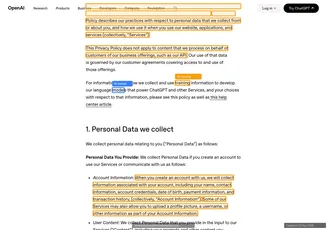
A Privacy Policy exists to answer one question: what happens to a visitor’s personal data once they hand it over, whether that is an email address in a signup form, a name and shipping address at checkout, or the analytics cookies that fire the moment the page loads. A complete policy names the categories of data collected, the purpose each category serves, whether any of it is sold or shared with third parties like ad networks or analytics providers, how long it is retained, and what rights the visitor has to access, correct, or delete it.
That last piece is not optional language. Laws like the EU’s GDPR and California’s CCPA (and the growing list of other US state privacy laws that followed it) give residents specific, enforceable rights over their own data, and a Privacy Policy is the document that has to spell those rights out. Skipping the policy does not remove the underlying legal obligation to honor those rights; it just means the site has nowhere it has actually told anyone what those rights are, which is its own separate problem if a regulator or a user ever asks.
What Terms and Conditions actually covers
Terms and Conditions, sometimes called Terms of Service or Terms of Use, is a different kind of document entirely. It is a contract the visitor agrees to by using the site, and its job is to define the relationship: what the visitor is allowed to do, what they are not allowed to do, who owns the content and code that makes up the site, what happens if they violate a rule, and how much the business is on the hook for if something goes wrong. Payment terms, refund and cancellation rules, account eligibility and termination, and dispute resolution or arbitration clauses all live here, not in the Privacy Policy.
Unlike a Privacy Policy, Terms and Conditions is not usually required by a specific statute just because a site exists. It becomes practically necessary the moment a site does something beyond publishing information: selling a product, running a subscription, letting people create accounts, or hosting content someone else uploads. Each of those features creates a category of dispute that only a clear set of terms can head off, and a site running any of them without terms is carrying that liability with nothing in writing to limit it.
Why the answer is usually both, but for different reasons
The two documents get triggered by different questions, and that is exactly why so many sites end up needing both without realizing it. A Privacy Policy is triggered by data collection, and data collection is close to universal. A brochure site with nothing but static pages and Google Analytics installed is already collecting personal data through cookies and IP addresses, which means it already needs a Privacy Policy even though it sells nothing and has no accounts. Terms and Conditions is triggered by a different set of features, selling, accounts, or user-generated content, so a site can genuinely skip it if none of those apply.
Run through those questions honestly and most commercial or interactive sites land in the same place: a Privacy Policy because they collect data (they almost always do), and Terms and Conditions because they sell something, take signups, or accept user content. A truly static, data-free page with no forms, no analytics, and no cookies is the rare exception where a Privacy Policy is not required, and even then Terms and Conditions can still be worth having for the liability protection alone.
Can one document do both jobs
Combining the two into a single page is technically possible and shows up on plenty of small sites, but it works against both documents’ purposes. A Privacy Policy is a notice, something a visitor should be able to find and read on its own to understand what happens to their data, and several state privacy laws now expect that notice to be reasonably accessible rather than buried inside unrelated contract text. Terms and Conditions is an agreement the visitor is bound by, and mixing “here is how we use your data” with “by using this site you agree to these terms” blurs a disclosure with a consent mechanism in a way that makes both harder to point to cleanly if either one is ever challenged.
- Privacy disclosures buried inside contract language
- Harder to point to a standalone privacy notice
- Data-use notice mixed with consent-to-contract language
- One update touches both privacy and liability terms
- Privacy Policy stands alone as a plain data-use notice
- Terms and Conditions stays focused on usage and liability
- Each document updates independently as the law or product changes
- Footer links to both, cross-referenced where they overlap
There is also a practical maintenance reason to keep them apart. A Privacy Policy needs to change whenever the site adds a new analytics tool, a new third-party integration, or a new data category, changes that have nothing to do with the site’s terms of use. Terms and Conditions needs to change when the business adds a new feature, a new pricing plan, or a new liability clause, changes that have nothing to do with data handling. Splitting the documents means each one can be updated on its own schedule without touching the other, and a visitor looking for one topic does not have to wade through the other to find it.
Publishing both without duplicating either
The two documents inevitably touch some of the same ground, cookies are the clearest example, since they matter for both data collection and site functionality, but the fix is not to write the same paragraph twice. The Privacy Policy should be the complete, authoritative source on what is collected and why, including cookie categories and third-party sharing. Terms and Conditions can reference the Privacy Policy by name and link to it for the data-handling detail, then stay focused on the usage rules and liability language that are actually its job. A short cross-reference in each document (Terms and Conditions pointing to the Privacy Policy for data questions, and vice versa for usage questions) keeps both documents complete without either one repeating the other’s content.
If you already know a Privacy Policy is the piece you are missing, our Privacy Policy generator builds one from a short set of questions about what data your site actually collects, so the disclosures match what the site really does rather than a generic template. If accounts, sales, or user content mean you need the other document too, the Terms and Conditions generator covers that half separately, which is the same separation this guide has been making the case for throughout.
Getting this right is less about picking the “correct” single document and more about matching each one to the question it actually answers. If your site collects data, and almost every real site does, a Privacy Policy is not optional. If your site sells, signs people up, or lets them post something, Terms and Conditions closes the gap the Privacy Policy was never meant to cover.