US vs EU Cookie Consent Requirements: What Your Cookie Policy Needs to Say
How opt-out US cookie rules differ from GDPR and ePrivacy's opt-in consent standard, and what a cookie policy must say differently for each audience.
Generate your Terms & Conditions for free. Get started now →
How opt-out US cookie rules differ from GDPR and ePrivacy's opt-in consent standard, and what a cookie policy must say differently for each audience.
A privacy policy and a cookie policy cover different ground and answer to different laws. Here is what each one actually discloses, where they overlap, and when a site needs both.
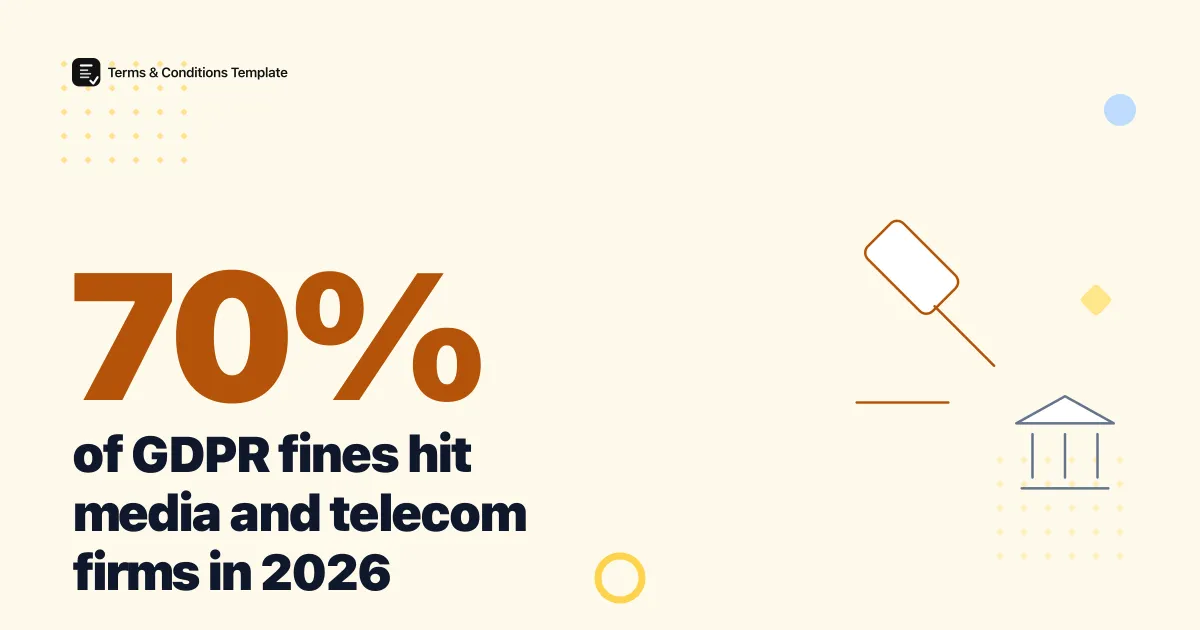
Media, telecoms, and broadcasting companies absorb 70% of the fines imposed on companies under the GDPR, per CMS's 2025 Enforcement Tracker Report. Here is how cookie and consent enforcement risk breaks down by industry heading into 2026.
A DPA governs the controller-processor relationship under GDPR Article 28. Standard Contractual Clauses are the separate mechanism that makes it lawful to move personal data outside the EU/EEA. Here is how SaaS companies need both.
A clause-by-clause guide to drafting a GDPR-compliant Data Processing Agreement: the subprocessor list, security measures, breach notification timelines, audit rights, and deletion terms Article 28 requires.
A practical guide to when GDPR requires a signed Data Processing Agreement with subprocessors like payment processors, email tools, and analytics vendors, what the agreement must contain, and how it differs from a privacy policy.
Only 15% of cookie banners are minimally GDPR-compliant and about 25% of visitors accept all cookies on first click. See the 2026 cookie consent data by device, region, and banner design.
A complete guide to what your Privacy Policy must contain under the EU General Data Protection Regulation (GDPR) in 2026.
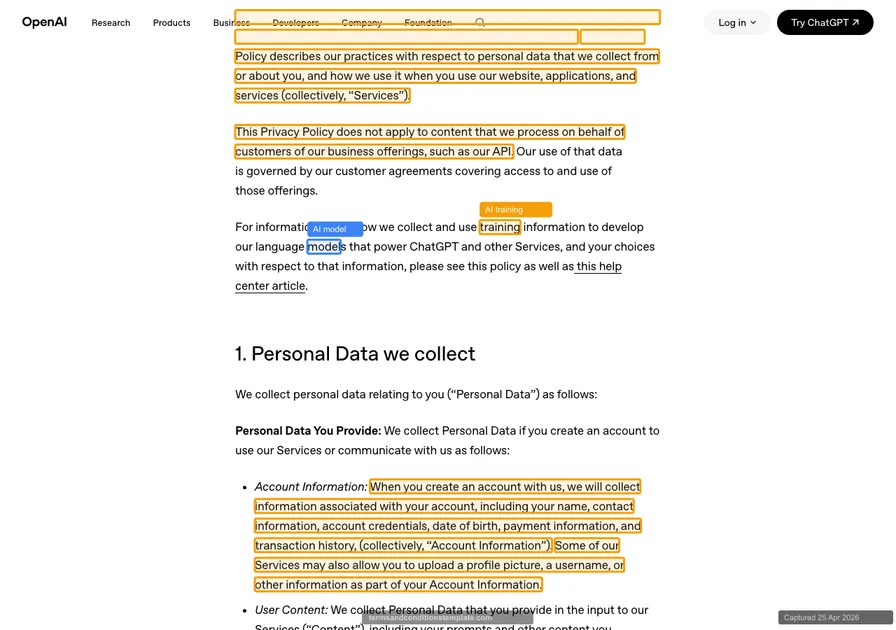
The EU AI Act is now in force. If your product uses AI features, your privacy policy needs to say so. Here's exactly what to add, with real examples from OpenAI, GitHub Copilot, Canva, and Figma.